How Much Protein Do You Need on GLP-1 Medications? Complete Guide
If you are taking a GLP-1 medication for weight loss, protein is the single most important thing on your plate, and most people are not getting enough of it. The appetite suppression that makes these drugs so effective also makes it very easy to eat far too little protein, and the consequence is not just slower progress. It is the loss of real, functional muscle that you will want to keep for the rest of your life. This guide walks through exactly how much protein you need, why the number matters so much on these medications, how to hit it when your appetite has collapsed, and which foods and meals make it realistic.
Why protein becomes the priority on GLP-1 medications
Every diet that produces weight loss costs you some lean mass along with fat. What makes GLP-1 and dual agonist medications different is the sheer speed and size of the weight loss, which pushes lean mass loss higher than most people expect. In the STEP 1 trial of semaglutide, participants who had body composition measured lost an average of 17.3 kg over 68 weeks, and roughly 40 percent of that weight came from lean mass rather than fat (Wilding et al., Obesity Reviews). In the SURMOUNT 1 trial of tirzepatide, participants lost about 10.9 percent of their lean mass over 72 weeks (Neeland et al., Diabetes, Obesity and Metabolism).
To put that in perspective, a review in the journal Circulation noted that semaglutide has been associated with lean mass loss of up to 40 percent of total weight lost, and older medications like liraglutide with up to 60 percent (Circulation, 2024). Researchers have estimated that the muscle lost during a typical 68 to 72 week course of these drugs is roughly equivalent to twenty years of normal age related muscle decline compressed into little more than a year. Lean mass is not just about looking toned. It drives your strength, your physical function, your resting metabolism, and your ability to keep the weight off once you reach your goal. Losing too much of it is the quiet way that fast weight loss turns into weight regain later.
The good news is that this outcome is largely modifiable. The two levers that decide how much muscle you keep are protein intake and resistance training, and of the two, adequate protein is the one you control at every single meal.
How much protein you actually need per day
The old baseline that most people learned, 0.8 grams of protein per kilogram of body weight per day, is the amount set by the Institute of Medicine to prevent deficiency in a healthy, weight stable adult. It was never meant for someone in a large calorie deficit trying to hold onto muscle. During active weight loss on a GLP-1 medication, the evidence points much higher.
A 2026 clinical nutrition review focused specifically on the GLP-1 era recommends a daily protein intake of at least 1.2 grams per kilogram of body weight, and up to 1.6 grams per kilogram for many adults during aggressive weight loss or resistance training, provided they do not have chronic kidney disease (Arslan, Clinical Nutrition ESPEN, 2026). Mayo Clinic guidance for people actively losing weight lands in the same range, at 1.2 to 1.6 grams per kilogram per day (Mayo Clinic). The LEAN PREP randomized trial, which is testing muscle preservation during semaglutide and tirzepatide therapy, set its protein target at 1.6 grams per kilogram per day (BMJ Open).
Here is how those targets translate for a few body weights. These use total body weight for simplicity, which is a reasonable starting point for most people. Adults with a large amount of excess weight may want to use adjusted body weight instead, which we explain below.
| Body weight | 1.2 g/kg (minimum) | 1.6 g/kg (active training or aggressive loss) |
|---|---|---|
| 150 lb (68 kg) | 82 g/day | 109 g/day |
| 180 lb (82 kg) | 98 g/day | 131 g/day |
| 220 lb (100 kg) | 120 g/day | 160 g/day |
| 260 lb (118 kg) | 142 g/day | 189 g/day |
Use the calculator below to get your personal daily and per meal protein target in one step.
GLP-1 Protein Calculator
Two important adjustments. Adults over 65 need the higher end of this range, generally 1.2 to 1.5 grams per kilogram, because aging muscle resists building and needs more protein to respond. People with chronic kidney disease are the exception to the whole discussion. For them, protein usually needs to stay near 0.8 grams per kilogram and must be set with a nephrologist, because too much protein can strain compromised kidneys.
A more accurate number if you carry a lot of excess weight
Using total body weight can overestimate protein needs in someone with a high body fat percentage, because fat tissue does not require protein the way muscle does. Clinicians often use adjusted body weight instead. The formula is straightforward. First estimate ideal body weight, then add one quarter of the difference between your actual weight and that ideal weight. Written out, adjusted body weight equals ideal body weight plus 0.25 multiplied by (actual body weight minus ideal body weight) (Arslan, 2026). You then apply the 1.2 to 1.6 grams per kilogram target to that adjusted number. This is the kind of calculation worth doing once with a dietitian so you have a precise daily gram goal to aim at.
Why per meal timing matters as much as the daily total
Hitting your daily protein number is only half the picture. Your muscles can only use so much protein in one sitting to trigger repair and growth, so spreading protein across the day works far better than eating it all at dinner. The 2026 review recommends distributing protein across three to four eating occasions, aiming for roughly 0.3 to 0.4 grams per kilogram at each meal, which for most adults means hitting about 2.5 to 3 grams of the amino acid leucine per meal, the threshold that switches on muscle protein synthesis (Arslan, 2026). In practical terms, most adults on a GLP-1 should target somewhere between 25 and 40 grams of protein at each of three meals.
There is a specific tactic that helps enormously on these medications. Front load your protein at the first meal of the day. Appetite is often at its lowest in the morning and gets worse as the day goes on and the dose is working, so getting a solid 30 grams of protein in early, before nausea or fullness sets in, protects the whole day. If you wait until evening to eat most of your protein, you will frequently find you are simply too full to finish it.
How to actually hit your protein target when you can barely eat
Knowing the number is easy. Eating it when a GLP-1 has erased your hunger is the real challenge. A few strategies make it manageable.
Lead every meal with the protein. Eat the chicken, fish, eggs, or Greek yogurt first, before the vegetables or carbohydrates, so that if you fill up after only a few bites, the bites you took were the ones that mattered most. Choose protein dense foods where the protein to calorie and protein to volume ratio is high, because you have very little room to work with. Lean poultry, fish, shellfish, eggs, Greek yogurt, cottage cheese, and tofu all deliver a lot of protein in a small, easy to tolerate portion. Keep protein liquids on hand for the days you cannot face a plate, since a shake or a high protein drink can rescue a meal you would otherwise skip entirely. Our guide to the best protein shakes for GLP-1 users covers which ones actually work, and GLP-1 friendly drinks goes further on liquids that help.
What 30 grams of protein actually looks like
Targets in grams per kilogram are easy to lose track of on a plate, so here is what roughly 30 grams of protein looks like across common foods. Building each meal around one of these gets most adults to a per meal target.
| Food | Amount for ~30 g protein |
|---|---|
| Chicken breast, cooked | 4 oz (about a deck of cards plus half) |
| Salmon or white fish, cooked | 4.5 oz |
| Lean steak, cooked | 4 oz |
| Shrimp, cooked | 5 oz |
| Greek yogurt, plain nonfat | 1.25 cups |
| Cottage cheese, low fat | 1 cup |
| Eggs | about 5 large |
| Tofu, firm | 7 oz |
| Whey protein powder | 1 scoop plus a splash of milk |
A quick note on protein quality. Not all protein is equal for muscle preservation. Animal proteins such as chicken, fish, eggs, and dairy contain all nine essential amino acids and the highest levels of leucine, the amino acid that switches on muscle repair, so they do the job in the smallest, easiest to tolerate portion. Soy foods like tofu and tempeh are complete plant options. Single plant proteins such as beans or rice on their own are missing one or more amino acids, so combine them or lean on soy and dairy if you eat mostly plants. One more thing to watch: higher protein intake pulls water, so if you push toward the top of your range, drink more water and keep fiber up to avoid the constipation that GLP-1 medications already tend to cause.
The best protein foods and meals on a GLP-1
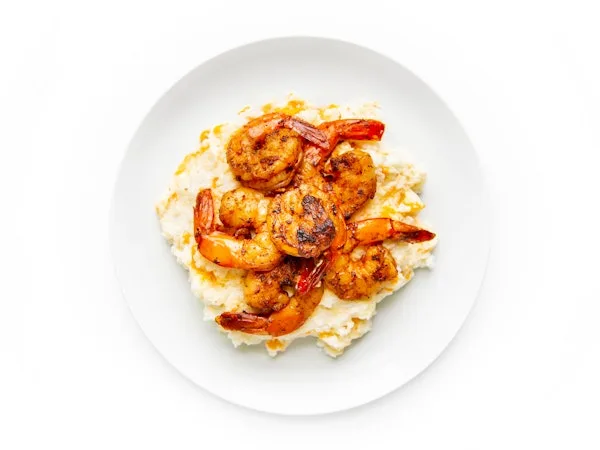
The ideal GLP-1 meal is high in protein, moderate in calories, gentle on the stomach, and requires no cooking on the days you have no energy. Grilled or baked lean proteins fit this perfectly. A piece of salmon or cod delivers 30 to 45 grams of protein with omega 3 fats that are easy to digest. Grilled chicken breast, lean steak, shrimp, and white fish all pack a large amount of protein into a small serving. Pair them with non starchy vegetables and a modest portion of a slow digesting carbohydrate like quinoa or lentils, and you have a plate built for muscle preservation.
Because cooking is often the thing that does not happen on a low appetite day, prepared meal delivery is one of the most practical tools for staying on target. Fully prepared, chef made meals with the macros printed on every label mean you can see exactly how much protein you are getting and reheat it in minutes, with no shopping or cleanup. That is why we put together a full breakdown of the best GLP-1 meal delivery options.
50% off your first box + 10% off boxes 2 & 3
On a GLP-1, the meals you skip are usually the ones you would have had to cook. CookUnity delivers chef made, high protein dishes with full macros on every label, so hitting your protein target takes no shopping and no cooking.
Get 50% Off CookUnity →Protein works far better paired with resistance training
Protein is the nutritional half of muscle preservation, but the research is consistent that resistance training is the other half, and arguably the more powerful one. The Obesity Reviews analysis concluded that all patients on these medications should combine adequate protein and micronutrient intake with resistance training to preserve muscle mass and function (Wilding et al.). You do not need a gym membership or heavy barbells. Two to three sessions per week of progressive resistance work targeting the major muscle groups, even done at home with bands or bodyweight, sends the signal that tells your body to hold onto muscle while the fat comes off. Protein supplies the raw material, and training tells the body to use it for repair rather than let it go.
Eating well on your specific medication
Protein is the foundation, but each medication has its own quirks worth understanding. If you want the full plate by plate approach for the drug you are on, we have detailed guides for each: what to eat on Ozempic, what to eat on Wegovy, what to eat on Mounjaro, what to eat on Zepbound, and what to eat on retatrutide. If you are managing blood sugar alongside weight, our 7 day diabetic meal plan pairs well with everything here.
Hitting your protein target as a vegetarian or vegan
Plant based eaters face a real challenge on GLP-1 medications, and most articles ignore it entirely. The difficulty is twofold. First, plant proteins are generally less concentrated than animal proteins, so you need a larger volume of food to reach the same grams, and larger volume is exactly what a suppressed appetite cannot handle. Second, most single plant proteins are lower in leucine, the amino acid that triggers muscle repair, which means the leucine threshold per meal is harder to reach. The practical answer is to lean on the most concentrated, highest quality plant proteins and to consider a plant protein powder as a genuine staple rather than an occasional extra. Soy foods such as tofu, tempeh, edamame, and soy milk are complete proteins with a favorable amino acid profile and should anchor most meals. Seitan is very protein dense if gluten is not an issue. Lentils, chickpeas, and other legumes contribute, but combine them with a grain across the day to cover all essential amino acids. A soy or pea protein isolate powder, delivering 20 to 25 grams per scoop, is often the single most useful tool for a plant based person on these drugs, because it packs the protein into a small, drinkable volume that bypasses the appetite problem. Plant based eaters may also want to sit at the higher end of the daily range and pay closer attention to leucine, aiming for a slightly larger protein portion per meal to compensate for the lower leucine density.
Protein and the hair loss so many people report
One of the most common complaints on GLP-1 medications is hair thinning or shedding a few months into treatment, and while several factors contribute, inadequate protein is a leading and fixable one. Rapid weight loss of any kind can trigger a temporary shedding phase called telogen effluvium, where a larger than normal share of hairs enter the resting and shedding stage at once. The body treats hair as non essential, so when protein and calories are scarce it deprioritizes hair growth in favor of vital functions. This is one more reason that hitting your protein target is not optional. Adequate protein supplies the keratin building blocks that hair is made from, and along with key micronutrients like iron, zinc, and biotin, it gives your body what it needs to keep growing hair through a period of weight loss. The shedding is usually temporary and reverses as weight stabilizes and nutrition improves, but chronically under eating protein can prolong it. If you are shedding, treat it as a signal to audit your protein intake honestly.
Your target changes as you lose weight
Because protein targets are calculated from body weight, your daily number is not fixed. As you lose weight on a GLP-1, your body weight drops, and a target set at your starting weight will gradually become more than you strictly need. This is not a reason to under eat protein, since during active loss erring slightly high is protective, but it is a reason to recalculate every ten to fifteen pounds or so. Recalculating keeps your target realistic and prevents the frustration of chasing a protein number that was set for a heavier version of you. Use your current weight, apply the same 1.2 to 1.6 grams per kilogram range, and adjust. The calculator above makes this a ten second job whenever the scale has moved meaningfully.
Common protein myths, cleared up
Two myths cause people to eat too little protein out of misplaced caution. The first is that high protein damages healthy kidneys. For people with normal kidney function, intakes in the 1.2 to 1.6 grams per kilogram range are well supported and safe, and the concern applies specifically to those with existing chronic kidney disease, who genuinely do need to limit protein under a nephrologist. If your kidneys are healthy, this range is not a risk. The second myth is that your body can only use twenty or thirty grams of protein per meal and wastes the rest. It is true that muscle protein synthesis per meal has a ceiling, which is exactly why we recommend spreading protein across meals, but the excess is not wasted. It is used for other essential functions and for energy, and it also supports satiety. The takeaway is not to fear protein but to distribute it sensibly.
Protein sources ranked for GLP-1 users
Not every protein is equally useful when your appetite is limited and muscle preservation is the goal. Ranked roughly from most to least efficient for this specific situation: lean animal proteins such as chicken breast, white fish, and shellfish top the list, delivering the most complete protein and leucine in the smallest, easiest to digest, lowest fat portion. Eggs and low fat dairy such as Greek yogurt and cottage cheese follow closely, and have the bonus of being easy to eat cold on nauseous days. Lean red meat and salmon are excellent but higher in fat, so keep portions modest to avoid worsening nausea. Whey protein powder is a top tier convenience option with the highest leucine content of any powder. Soy foods are the best complete plant option. Legumes and grains work but require larger volumes and combining. At the bottom for this purpose are heavily processed high fat protein foods, which technically supply protein but come with the fat load that triggers nausea and the extra calories that work against you. When appetite is your limiting factor, protein density and low fat win.
Frequently asked questions
How much protein should I eat per day on Ozempic or Wegovy?
For most adults without kidney disease who are actively losing weight, aim for 1.2 to 1.6 grams of protein per kilogram of body weight per day. For a 180 pound adult that is roughly 98 to 131 grams daily, spread across three or four meals.
Is it possible to eat too much protein on a GLP-1?
For healthy adults, intakes up to about 1.6 grams per kilogram are well supported and safe. The main exception is chronic kidney disease, where protein needs to be limited and set with a nephrologist. If you have any kidney concern, confirm your target with your doctor before increasing protein.
What if I cannot eat enough protein because I feel full or nauseous?
Front load protein at breakfast when appetite is highest, lead every meal with the protein first, choose protein dense foods, and use protein shakes or drinks on the hardest days. Prepared high protein meals also remove the cooking barrier that causes many people to skip meals entirely.
Will protein alone stop muscle loss on these medications?
Protein reduces muscle loss but works best combined with resistance training two to three times per week. The combination of adequate protein and resistance exercise is the approach supported across the clinical literature.
This article is general nutrition information and not medical advice. Protein needs are individual and depend on your age, kidney function, activity, and rate of weight loss. Work with your prescriber or a registered dietitian to set your personal targets, especially if you have any kidney condition.
Struggling with queasiness too? See what to eat when a GLP 1 makes you nauseous, and the best GLP 1 meal delivery services.
Find your meal service match
Answer 30 questions about how you eat. We'll rank your top 3 from 24 services we track.