Home Chef vs Factor (2026): We Tested Both. Honest Winner
What readers actually got


Get your Home Chef vs Factor guide
Email me three short guides to Home Chef vs Factor guide, plus related MealFan emails. Unsubscribe anytime.
New subscribers receive this guide. Existing subscribers update their interest without restarting a welcome series.
Reader reviews
What readers say about Factor
Unpaid reviews from readers, published as written.
Liked the shipping container.. but liked Cook Unity's food packaging a bit better due to better graphics involving description of the meal within..while some of the meals seemed more ample & tastier than Cook Unity's but it depended on...
Factor vs Home Chef: which is better in 2026?
Home Chef scores higher on our tests (8.8/10 vs Factor 8.4/10) and is the better pick for most people who like to cook, winning on recipe variety, protein swaps, and value. Choose Factor if you would rather not cook at all, since its meals arrive fully prepared and reheat in 2 minutes. Home Chef meal kits start at $9.99 per serving. Factor pricing depends on plan size; check its current plan price and shipping before ordering.
- Higher MealFan score: Home Chef 8.8/10 vs Factor 8.4/10
- Best if you want to cook: Home Chef, customizable kits with swap friendly proteins
- Best for zero prep: Factor, fully prepared meals with a 2 minute reheat
- Pricing: Home Chef kits from $9.99 a serving, Factor $12.99 to $17.49 a meal
- Tested head to head for 3 weeks by MealFan (June 2026)
Weighing a meal-kit option instead? See Sun Basket vs Home Chef.
Quick verdict (September 2026): Home Chef (8.8/10) wins overall. It is a customizable meal kit you cook in about 30 minutes, with swap-friendly proteins, Oven-Ready options, meal kits from $9.99 per serving. Factor (8.4/10) is fully prepared and needs only a 2-minute reheat, with dietitian-approved macros, which makes it the better pick for solo, no-cook eaters. Home Chef takes it for value and flexibility; choose Factor if zero-prep convenience matters most. Factor pricing depends on plan size; check its current plan price and shipping before ordering.
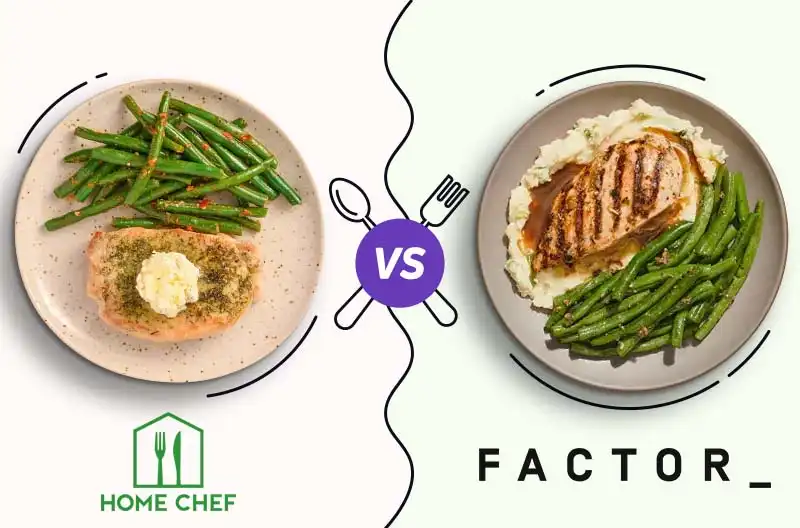
Home Chef is our overall winner on value and meal-kit customization. Factor is the better pick for macro tracking and 2-minute prep. The split: Home Chef wins if you value a lower price per serving and Customize It swaps; Factor pulls ahead on consistency and nationwide delivery for solo eaters. Pick based on which trade-off matches how you actually eat.
Home Chef vs Factor weekly cost calculator
Why you can trust this
I am Eric Sornoso, founder of MealFan. Since 2019 I have personally ordered from and tested 50+ meal delivery services on my own card, never comped review boxes. I run each service for at least three weeks and weigh every portion on a kitchen scale to check it against the label. No brand pays for placement, and services that pay the highest commissions still rank poorly here when the food falls short.
I Tested Both Home Chef and Factor for 3 Weeks
I ordered both Home Chef and Factor for three weeks straight with my own credit card. No press accounts, no free samples, no “send us your best box” arrangements. Real money, real meals, real verdict.
Here’s what I found: these services aren’t even competing for the same customer. Home Chef wants you to cook. They send ingredients and recipes, you spend 30-45 minutes making dinner. Factor wants you to skip cooking entirely. Microwave for 2 minutes, done. The price gap reflects this. Home Chef’s meal kits start at $9.99 per serving, with premium meals costing more. The September 2026 Factor plan rates used here range from $12.99 to $17.49 per meal before shipping, promotions, and extras.
I kept Factor longer. Not because Home Chef was bad. Their Customize It feature where you swap proteins is genuinely clever, and the value proposition for families is strong. But I’m a single guy who works late and doesn’t want to measure out tablespoons of anything at 9 PM. Factor’s grab-and-go format won that fight. Your situation might be different.
The taste gap surprised me. I expected Factor’s pre-made meals to taste like airplane food. They don’t. Some of their stuff. The Filet Mignon with Peppercorn Sauce, the Blackened Salmon. Actually slaps. Home Chef’s recipes delivered better highs (their Pan-Seared Steak with Chimichurri was restaurant-quality) but also some mid moments where I realized I’d just spent 40 minutes making something I could’ve grabbed from Chipotle for less money and effort.
Quick Verdict: Home Chef vs Factor
Home Chef wins overall for value, variety, and family meals. Factor is best for convenience and consistent quality when you want zero cooking. Pick based on whether you want to cook.
| Category | Home Chef | Factor | Winner |
|---|---|---|---|
| Price per Serving | From $9.99 | $12.99 to $17.49 | Home Chef (by a lot) |
| Meal Variety | 35+ recipes weekly, highly customizable | 35+ meals weekly, zero customization | Home Chef |
| Prep Time | 30-45 minutes (kits), under 30 (Express), no prep (Oven-Ready) | 2-3 minutes microwave | Factor (not close) |
| Dietary Options | 10 filters (keto, low-carb, vegetarian, etc) | 8 specific diet plans (keto, paleo, calorie-smart) | Tie |
| Taste Quality | 8/10 (when you nail the recipe) | 7.5/10 (consistent, rarely disappoints) | Home Chef (slight edge) |
| Value for Money | Excellent for families | Premium pricing, premium convenience | Home Chef |
| Family-Friendly | 2-6 servings available | Single servings only | Home Chef |
| Convenience | Requires cooking skills and time | Zero cooking required | Factor |
Who Should Pick Home Chef
You’re feeding a family. Home Chef does 2, 4, or 6 servings. Factor doesn’t. If you’ve got kids or a partner who also needs to eat, the math shifts hard in Home Chef’s favor. A 4-serving standard meal at $9.99/serving is $39.96 total. Four Factor meals would run you $51.96 to $69.96. That’s $12 to $30 more for the same number of people fed.
You actually like cooking. Some people find meal prep relaxing. If that’s you, Home Chef’s recipes are solid. Clear instructions, pre-portioned ingredients, 30-45 minutes from box to table. Their Customize It feature lets you swap proteins (sub steak for chicken, pork for turkey, etc), which matters if someone in your house won’t eat certain things.
Budget matters. Home Chef’s meal kits start at $9.99 a serving. Factor’s cheapest meals are $12.99, on 14 or more a week. Six Home Chef servings at $9.99 each total $59.94 before shipping; the actual total depends on the meals selected.
You want variety in prep styles. Home Chef offers traditional meal kits (chop, cook, 30+ min), Oven-Ready meals (no prep, straight into the oven), and Express meal kits (under 30 minutes). Factor offers one thing: microwave. If you want options based on how much time you have that night, Home Chef gives you that flexibility.
You live near a Kroger. Home Chef is owned by Kroger, which means you can pick up meals in-store at some locations. No shipping fee, no waiting for delivery. If you’re already doing a grocery run, this is convenient and cuts the shipping fee entirely.
A detail most comparisons miss: the Kroger connection is bigger than one banner. Fred Meyer, Ralphs, King Soopers, and other Kroger-family stores stock Home Chef kits off the shelf with no subscription at all, while Factor exists only as an online subscription. The oven-ready math is worth spelling out too, no prep, then unattended time in the oven, priced like the classic kits. A 2-person, 3-meal Home Chef week of standard meals is about $60 before shipping, where six Factor meals cost at least $77.94 before shipping even at Factor’s lowest September 2026 rate ($12.99, on 14 or more meals). And the protein swaps go further than a gimmick: chicken, beef, salmon, or shrimp can be substituted on eligible recipes, which no other mainstream kit offers at that scale.
Who Should Pick Factor
You hate cooking. I mean genuinely hate it. Not “I’m too busy” but “I would rather do anything else.” Factor eliminates cooking. Two minutes in the microwave. That’s it. No chopping onions, no washing pans, no standing over a stove wondering if you’re doing it right.
You’re single or live alone. Factor only does single servings. That’s a dealbreaker for families but perfect if you’re feeding just yourself. Home Chef makes you buy at least 2 servings per meal, which means leftovers or waste if you’re solo. Factor portions are designed for one person. Nothing extra, nothing wasted.
You work weird hours. Night shifts, double shifts, unpredictable schedules. Factor works when you can’t plan around a 30-minute cook window. Grab a meal from the fridge, nuke it, eat it at your desk or in your car or at 3 AM. Home Chef requires you to have 30-45 minutes free and enough energy to follow a recipe. Factor doesn’t.
You’re on a specific diet plan. Factor designs meals around keto, paleo, high-protein, and calorie-smart diets. Every meal is labeled with macros. If you’re tracking carbs or protein or calories religiously, Factor’s portion-controlled single servings with clear nutritional data make that easy. Home Chef has diet filters but you’re still cooking, which means potential variance in final macro counts depending on how much oil you use, how you portion, etc.
You value consistency over peak quality. Factor meals land in the 7-8/10 range consistently. I never got a Factor meal I hated, but I also never got one that blew my mind. Home Chef’s ceiling is higher (some meals hit 9/10) but the floor is lower (some meals were just okay). If you’d rather have reliable good than occasional great, Factor wins.
You’re willing to pay for time. Factor costs about $3 to $7.50 more per serving than Home Chef’s meal kits from $9.99. That premium buys you 28 to 43 minutes per meal (the time you’d spend cooking Home Chef’s recipes). If your hourly rate makes that math work, Factor is the move. If $6 extra per meal feels painful, it’s not.
Pricing Breakdown: What You Actually Pay
Home Chef‘s pricing is all over the place because every meal is individually priced. Meal kits start at $9.99 per serving; premium meals with steak or seafood cost more. You pick what you want each week, and your total depends on your selections. Shipping is a flat fee after your first box, shown at checkout.
Factor‘s pricing is simpler but higher. You pick a plan size (4 to 14 or more meals per week), and standard meal prices depend on plan size; premium meals and extras can cost more. Here’s the September 2026 breakdown from the MealFan Price Index. The examples below use these dated rates and $12.99 shipping; check Factor’s current plan price, shipping, and offer for your ZIP code before ordering:
- 4 meals/week: $17.49/meal = $69.96 + $12.99 shipping
- 8 meals/week: $14.49/meal = $115.92 + shipping
- 10 meals/week: $13.99/meal = $139.90 + shipping
- 14 or more meals/week: $12.99/meal ($181.86 for 14) + shipping
Let’s run real scenarios. Say you’re a single person eating 5 dinners a week from one of these services (Monday-Friday, you fend for yourself on weekends).
Home Chef scenario (one person, 3 standard meals at 2 servings each): 6 servings at $9.99 = $59.94/week plus shipping, about $10 per serving before shipping, with leftovers for lunch.
Factor scenario (4 meals ordered, its smallest plan): At the September 2026 rates above, 4 meals at $17.49 each cost $69.96 + $12.99 shipping = $82.95/week, or $20.74 per meal including shipping, and you cover the fifth dinner yourself. These examples exclude promotions and extras.
The gap widens for families. A couple eating 4 dinners a week together (8 servings total) via Home Chef’s 2-serving meals: Four standard meals at $9.99/serving = $79.92/week plus shipping. That same couple using Factor would need 8 individual meals at $14.49/meal (8-meal plan) = $115.92/week plus shipping. Home Chef saves about $36/week before shipping in this scenario.
Both services run aggressive intro promos. Home Chef has advertised 30% off your first 3 boxes and 45% off the next 2 (terms not re-checked this month). Factor offers 50% off your first box plus 20% off the next 4 boxes. These promos make the first month cheap for both. For illustration, 50% off the $69.96 food subtotal would make four Factor meals $34.98 before shipping. With the $12.99 shipping fee used here, the total would be $47.97. Actual offers and eligibility must be checked at checkout. But after the promo period ends, Factor’s baseline pricing is just higher. That’s the tradeoff for not cooking.
Both brands offer discounts for some eligible groups. Factor’s Hero Discount Program advertises 55% off the first box with free shipping and 15% off the next 51 boxes for qualifying customers. Check eligibility, exclusions, and current terms with each brand before comparing your total.
Menu and Meal Options
Both services rotate 35+ options weekly. Neither one is going to bore you with repetitive menus. But the style of those options differs significantly.
Home Chef‘s menu reads like a cooking magazine. Pan-Seared Steak with Chimichurri Butter. Parmesan-Crusted Chicken with Garlic Butter Orzo. Sesame-Glazed Pork Tenderloin. These are recipes, not just meals. You’re chopping, sautéing, seasoning, plating. The instructions assume basic cooking knowledge (you know what “sauté until fragrant” means, you can tell when chicken is done). Most recipes take 30-45 minutes and use 5-8 ingredients.
Their Customize It feature is the standout. About half the menu lets you swap proteins. If a recipe calls for chicken but you’d rather have steak, you swap it (price adjusts accordingly). If someone in your house won’t eat pork, you can sub turkey or shrimp. This flexibility matters when you’re feeding multiple people with different preferences.
Home Chef also offers three prep levels: traditional meal kits (full cooking), Oven-Ready meals (no prep, bake in the tray), and Express meal kits (under 30 minutes). If you’re short on time one week, you can shift to faster options without switching services.
Factor‘s menu is built around diet plans. Every meal is tagged with keto, paleo, high-protein, calorie-smart (under 550 cal), or vegetarian labels. You filter by your diet, pick your meals, done. The menu descriptions are straightforward: Filet Mignon with Peppercorn Sauce. Blackened Salmon with Lemon Butter. Chicken Sausage & Peppers. These aren’t recipes. They’re complete meals that show up fully cooked.
Factor’s strength is in dietary specificity. If you’re doing strict keto, you can filter to only keto meals and trust the macros. Every meal lists exact carbs, protein, fat, and calories. Home Chef has diet filters too (keto-friendly, low-carb, high-protein, etc), but you’re still cooking, which introduces variability. Did you use the exact amount of oil the recipe called for? Did you weigh your portions? Factor removes that uncertainty. What’s on the label is what you’re eating.
Both services offer add-ons beyond dinner. Home Chef has breakfast options (frittatas, breakfast burritos), desserts (cookies, brownies), and snacks. Factor has breakfast items (egg bites, smoothies, overnight oats), protein shakes, snacks, and even supplements through their Form line (Daily Greens powder, Whey Protein, Hydration Boost). Factor’s add-on game is more developed if you want a one-stop shop for all meals and nutrition products.
Vegetarian and vegan options: both services are weak here. Home Chef usually has 3-5 vegetarian meals per week (pasta dishes, veggie stir-fries, grain bowls) but zero dedicated vegan options. You’d have to customize and remove dairy/eggs yourself. Factor has 2-4 vegetarian meals weekly and occasional vegan options, but it’s not their focus. If you’re plant-based, neither of these is your best bet. CookUnity or Purple Carrot would serve you better.
Meal variety over time: I tracked this for three weeks. Home Chef repeated 2 meals across those weeks (both popular options. The Steak Chimichurri and a Chicken Parmesan variant). Factor repeated 3 meals but rotated in enough new options that I didn’t feel stuck in a loop. Both services let you skip weeks or pause if the menu doesn’t excite you that week.
How They Actually Taste
Across 21 meals from each service over three weeks, Home Chef hit the higher peaks and Factor stayed more consistent. Home Chef’s best reach 8.5 to 9 out of 10 when you cook the recipe well, but its floor drops to 6 to 7. Factor’s best land at 7.5 to 8 and rarely miss. Here is what showed up on my plate.
Factor‘s best: The Filet Mignon with Peppercorn Sauce is genuinely impressive for a microwaved meal. The steak arrived medium (I expected overcooked), the peppercorn sauce had actual depth, and the roasted Brussels sprouts side wasn’t mushy. This meal would cost $30-40 at a restaurant. Factor charges $12.99 to $17.49 a meal depending on plan size. That’s the value proposition when they nail it.
The Blackened Salmon with Lemon Butter is another winner. The salmon had a proper sear (somehow, despite being pre-cooked and reheated), the seasoning wasn’t just “spicy” but had complexity (paprika, cayenne, garlic), and the portion was generous. 5-6 oz of fish, not a sad 3 oz filet. The roasted sweet potato side was fine, nothing special, but the salmon carried the meal.
The Korean Beef Bulgogi Bowl surprised me. I expected bland Americanized Korean food. What I got was properly marinated beef with a tangy-sweet gochujang sauce, pickled cucumbers that added actual crunch and acidity, and jasmine rice that wasn’t gummy. Not as good as the Korean spot down the street, but better than I expected from a meal kit company.
Factor’s misses: The Chicken Sausage & Peppers was boring. Sausage was fine, peppers were fine, everything was just fine. No salt, no spice, no reason to order it again. It tasted like cafeteria food. Not bad, but aggressively mid.
The Turkey Meatballs with Marinara had a texture problem. The meatballs were dense and slightly dry (turkey’s fault, not Factor’s), and the marinara was too sweet. I added red pepper flakes and parmesan to save it. Edible, not enjoyable.
Several of Factor’s veggie sides are underseasoned. Green beans, broccoli, cauliflower. They show up steamed or roasted but taste like they were cooked by someone afraid of salt. I started keeping hot sauce and garlic powder nearby to fix this. The proteins are usually solid; the vegetables need help.
Home Chef‘s best: The Pan-Seared Steak with Chimichurri Butter is restaurant-quality. The recipe has you sear the steak in a hot pan (they send good cuts. Sirloin or strip, not sad thin steaks), then top it with a compound butter made from parsley, garlic, lemon zest, and butter. The result is legitimately delicious. The roasted potatoes side was crispy, well-seasoned, perfect. This meal took 40 minutes but earned every minute.
The Parmesan-Crusted Chicken with Sun-Dried Tomato Orzo is comfort food done right. You coat the chicken in panko and parmesan, bake it until crispy, then make a creamy orzo with sun-dried tomatoes, spinach, and garlic. Rich, satisfying, the kind of meal that feels like you actually cooked. My only complaint: the portion was huge. Two servings is genuinely two full meals, not two sad half-portions.
The Sesame-Glazed Pork Tenderloin with Snap Peas nailed the sweet-savory balance. The glaze had soy, honey, ginger, and sesame. Actual flavor complexity, not just “Asian-inspired” blandness. The pork was tender (easy to overcook, I didn’t), and the snap peas stayed crunchy. This is the kind of meal that makes you feel like a competent cook even if you’re not.
Home Chef’s misses: The Chicken Fajita Bowl was fine but not worth the effort. Sautéed chicken, peppers, onions, rice, salsa, cheese. I spent 35 minutes making something I could’ve gotten from Chipotle in 5 minutes for $10.50. The recipe wasn’t bad. It just didn’t justify the time investment.
The Shrimp Scampi with Linguine had a garlic problem. Not enough of it. The recipe called for 2 cloves. It needed 4. The shrimp were fine (pre-peeled, decent size), but the sauce was bland. I ended up adding more garlic, lemon juice, and red pepper flakes. Edible, but I had to rescue it.
One meal arrived with a bad zucchini. Brown spots, soft texture. I contacted Home Chef, they refunded that meal immediately, no hassle. But it’s a reminder that fresh ingredients can have quality issues that pre-made meals don’t.
Head-to-head: Factor’s best meals are 7.5-8/10. Consistently good, rarely great. Home Chef’s best meals are 8.5-9/10 when you execute the recipe properly. But Home Chef’s floor is lower. Some meals land at 6-7/10 when the recipe is uninspired or the ingredients aren’t perfect. Factor’s floor is higher because everything is pre-made. Even their worst meals are 6/10, edible and fine.
If you want the highest peaks and don’t mind occasional misses, Home Chef wins. If you want reliable good without the risk of mid, Factor wins.
Cooking and Prep Experience
Home Chef requires actual cooking. You’re not just reheating. You’re chopping, sautéing, roasting, simmering. The recipes assume basic kitchen competence (you know how to use a knife, you can tell when something’s done, you won’t burn garlic). Most meals take 30-45 minutes from opening the box to sitting down with food.
The instructions are clear. Step-by-step photos, ingredient lists, timing guidance. I never felt lost following a Home Chef recipe. The ingredients come pre-portioned (exact amounts of spices, oils, etc in little packets), which eliminates the “do I have cumin?” panic. You still need basic kitchen equipment. A cutting board, a good knife, pots and pans, measuring spoons. If you don’t have those, Home Chef isn’t going to work.
Not sure what’s cooking this week? Browse the Home Chef weekly menu before you decide.
The Customize It feature adds 2-3 minutes to prep when you swap proteins (different cook times for chicken vs steak), but the instructions adjust automatically. The biggest time sink is cleaning. You’re using multiple pans, bowls, cutting boards. Budget 10-15 minutes for cleanup after eating. That’s the hidden cost of meal kits. Factor dirties one plate and a fork, Home Chef dirties half your kitchen.
Home Chef’s Oven-Ready line needs no prep: the meal comes in its own baking tray and goes straight into the oven, with the bake time printed on each recipe. No chopping, minimal cleanup. These meals are a smart middle ground if you want homemade food without the full cooking process. The Express line is the faster meal kit option, designed to come together in under 30 minutes.
Ingredient quality: mostly solid. Proteins were fresh (chicken, beef, pork all looked and smelled right). Vegetables were hit or miss. I got one bad zucchini, one sad bell pepper over three weeks. Dairy and cheese were consistently good. The pre-portioned spice packets are convenient but sometimes underseasoned. I found myself adding extra salt, pepper, or garlic to about 30% of recipes.
Factor requires zero cooking. Open the box, peel back the film, microwave for 2-3 minutes. That’s it. The instructions are printed on every meal tray (“microwave on high for 2:30, let stand 1 minute”). I never had a meal that needed more than 3 minutes. Some took less. The breakfast egg bites only needed 90 seconds.
The trays are microwavable plastic (BPA-free, they claim). They’re single-use, which generates waste, but they’re also convenient. No plate needed, eat straight from the tray if you want. I usually transferred to a real plate because I’m not an animal, but the option exists.
Heating evenness: mostly good. A few meals had cold spots in the center (thick proteins like chicken breast or meatballs), which I fixed by stirring halfway through or adding 30 seconds. Nothing stayed cold enough to be unsafe, just slightly uneven heating. The rice and grain sides heated perfectly every time.
Portion sizes: Factor’s portions are designed for one person and they nail it. Factor’s meals left me satisfied, not stuffed, not hungry. If you’re a bigger person or very active, you might need to add a side or snack. Home Chef’s portions for 2 servings are genuinely 2 full meals. No skimping. I had leftovers a few times when I miscalculated hunger levels.
Cleanup: Factor wins by a mile. Throw away the tray, rinse your fork, done. 30 seconds total. Home Chef dirties cutting boards, knives, pans, bowls, measuring spoons. Even with a dishwasher, you’re spending 10-15 minutes on cleanup. That’s not a dealbreaker if you enjoy cooking, but it’s a real time cost if you don’t.
Delivery and Packaging
Both services ship nationwide via FedEx or UPS, arriving on your chosen delivery day (you pick during signup). Both use insulated boxes with ice packs to keep food cold during transit.
Home Chef‘s packaging: ingredients come in a large cardboard box with ice packs lining the bottom and sides. Proteins are vacuum-sealed and sitting directly on ice. Vegetables and dry goods are in separate bags on top. The box stays cold for 12+ hours after delivery (I tested this by leaving it on the porch all day in 75°F weather. Everything was still cold at 6 PM).
The packaging generates a lot of waste. Cardboard box, plastic ice pack sleeves, vacuum-sealed protein bags, individual spice packets, produce bags. Home Chef includes recycling instructions, and the ice pack gel is supposedly drain-safe, but you’re still throwing away a lot of plastic. This bothers some people more than others. It bothered me a little.
Factor‘s packaging: meals come in a smaller box (less volume since everything’s pre-made and stacked) with fewer ice packs (meals are already cooked, less strict temperature requirements). The meal trays are plastic and stacked neatly. Less packaging waste than Home Chef overall, but the trays themselves are single-use plastic. Factor claims they’re recyclable in some areas (check your local recycling rules), but most of this is going to landfill.
Delivery reliability: I had 6 deliveries from each service over three weeks. Home Chef was on time 5 out of 6 times (one box arrived a day late, customer service credited me immediately). Factor was on time 6 out of 6 times. Both services send tracking info the day before delivery. Both let you leave delivery instructions (“leave on porch”, “ring doorbell”, etc).
Coverage: Home Chef covers “most ZIP codes” but I didn’t test rural or remote areas. If you live somewhere very rural, check their ZIP code tool before signing up.
Freshness: Home Chef’s ingredients arrived fresh every time (except that one bad zucchini). Proteins had 3-5 days of fridge life remaining, vegetables had 4-7 days. Factor’s meals have a 7-day fridge life from delivery date. Every meal I got had at least 5 days remaining. Nothing arrived spoiled or smelling off. Both services pack with enough ice that food stays cold even if you’re not home when the box arrives.
Shipping cost: Home Chef charges a flat fee on every box after your first, shown at checkout. Factor charges $12.99 a box, added at checkout (MealFan Price Index, September 2026). These fees are standard for meal delivery. Not cheap, but not outrageous compared to competitors.
One sustainability note: Home Chef’s partnership with Kroger means you can skip shipping entirely if you live near a participating Kroger store. You order online, pick up in-store, no box, no ice packs, no shipping fee. This is the most eco-friendly option if it’s available in your area. Factor doesn’t offer in-store pickup.
One more note before the verdict: this page pits a meal kit against prepared meals. If you'd rather compare Home Chef to another kit, especially an organic-leaning one, the Home Chef vs Sun Basket head-to-head settles that matchup.
The Final Call: Home Chef vs Factor
Home Chef wins overall. It delivers better value, more variety, and family-friendly portions, and it is the service most people should start with. Factor is the better pick for one specific use case: solo eaters who want zero cooking and grab-and-go convenience. For my own single, work-late schedule, Factor’s 2-minute format fit best and I kept it active after testing. But for the broader value question this comparison is built around, Home Chef is the stronger choice.
But that’s my situation: single guy, works unpredictable hours, values time over money, doesn’t mind paying $13 to $17 a meal for zero-effort food. Your situation might be different.
Pick Home Chef if: You’re feeding a family (the per-person cost is lower than Factor’s). You actually enjoy cooking and find it relaxing. You’re watching your budget and want standard meals at $9.99/serving. You want customization and variety in prep styles. You live near a Kroger and can skip shipping fees entirely.
Pick Factor if: You’re single or feeding just yourself. You hate cooking or genuinely don’t have time for it. You work weird hours and need grab-and-go food. You’re tracking macros for a specific diet (keto, paleo, high-protein) and want portion-controlled meals with accurate nutritional data. You’re willing to pay about $3 to $7.50 more per serving to save 28 to 43 minutes of cooking and cleanup time.
The decision isn’t about which service is “better”. it’s about which one fits your life. Home Chef is objectively better value for families. Factor is objectively more convenient for individuals. Both deliver on their promises. Neither one is a scam or a disappointment.
If you’re still unsure, here’s what I’d do: try Factor first with an introductory offer if you qualify; compare the full food and shipping total at checkout. Eat it for a week. If you love the convenience and don’t mind the price, keep it. If you find yourself thinking “I could’ve just cooked this myself for half the cost,” cancel Factor and try Home Chef’s intro offer instead. You’re only risking one week to figure out which camp you’re in.
Real talk: most people who try Factor keep it longer than they expect to. The convenience is addictive once you realize you can skip the entire cooking process and still eat real food. Most people who try Home Chef use it for 2-3 months, then cancel because life gets busy and 30-45 minutes of cooking feels like a lot. That’s not a knock on Home Chef. It’s just the reality that convenience wins when you’re tired.
Bottom line: Home Chef wins overall for value and variety. Factor is best for individuals who want zero-prep convenience. Pick accordingly.
FAQ: Home Chef vs Factor
Is Factor better than Home Chef?
Factor is better for convenience (2-minute prep vs 30-45 minutes) and consistent quality. Home Chef is better for value (lower cost per serving) and family servings. Factor wins for individuals who don’t want to cook. Home Chef wins for families on a budget who don’t mind cooking.
Which is cheaper, Home Chef or Factor?
Home Chef is cheaper per serving. Home Chef meal kits start at $9.99 per serving. Factor meals run $12.99 to $17.49 per meal. A couple eating 4 dinners a week pays about $80 with Home Chef before shipping, against about $116 on Factor’s 8-meal plan. The gap grows with family servings.
Which has better tasting meals?
Home Chef has higher peaks (8.5-9/10 when you nail the recipe) but lower floors (6-7/10 for uninspired recipes). Factor is more consistent (7-8/10 across the board). Factor’s best meals. Filet Mignon, Blackened Salmon, Korean Bulgogi. Are legitimately impressive for microwaved food. Home Chef’s best meals. Pan-Seared Steak, Parmesan Chicken, Sesame Pork. Are restaurant-quality when cooked properly. If you want the best possible meal, Home Chef wins. If you want reliable good every time, Factor wins.
Which should I try first?
Try Factor first if you’re single, work long hours, or hate cooking. Try Home Chef first if you’re feeding a family, enjoy cooking, or want a lower food subtotal. Six servings at $9.99 each cost $59.94 before shipping; this is not a delivered weekly budget. Both run intro offers. Home Chef has advertised 30% off your first 3 boxes and 45% off the next 2 (terms not re-checked this month); Factor offers 50% off your first box plus 20% off the next 4. After the promos end, Home Chef’s standard pricing stays lower per serving.
Can I skip cooking with Home Chef?
Partially. Home Chef’s Oven-Ready line needs no prep; it bakes in its own tray. Their Express meal kits come together in under 30 minutes. But neither is as fast as Factor’s 2-minute microwave meals. If you want truly zero cooking, Factor is the only option between these two.
Do both services work for keto or paleo diets?
Yes, but Factor is better for strict adherence. Factor designs meals specifically for keto and paleo with exact macros listed. Home Chef has keto-friendly and low-carb filters, but you’re still cooking, which means potential variance in final carb counts depending on portion sizes and added fats. If you’re tracking macros religiously, Factor’s portion-controlled meals are more reliable.
Can I feed a family with Factor?
Not practically. Factor only does single servings. To feed a family of 4, you’d need to order 4 individual meals per dinner. At $12.99 to $17.49/meal, that’s $51.96 to $69.96 per dinner before shipping. Home Chef’s standard meals at 4 servings start at $39.96, cheaper for the same number of people. Factor is designed for individuals, not families.
Which service has better customer service?
Both are solid. I had to contact Home Chef once (bad zucchini) and got an immediate refund, no questions asked. I didn’t have issues with Factor that required contacting support, but their online reviews show similar responsiveness. Both let you skip weeks, pause, or cancel easily through their websites. No phone calls required. Neither service makes you jump through hoops to cancel, which is a green flag.
How We Tested
We ordered multiple boxes from both Home Chef and Factor, prepared each meal according to instructions, and evaluated them on taste, ingredient quality, portion sizes, ease of preparation, packaging, and overall value per serving. Our ratings reflect real hands-on experience, not marketing claims.
Where this matters by location
Both services deliver to most US metros, but local factors (heat, cold chain hubs, apartment fridges) sometimes change the answer. See our city-specific picks:
Home Chef vs Factor compared to our 2026 national rankings
- Home Chef review: our standalone review with full pricing, taste test, and customer feedback.
- Factor review: our standalone review with full pricing, taste test, and customer feedback.
- Best meal delivery services of 2026: master ranking. See where Home Chef and Factor land overall.
- Best high protein meal delivery: services with 30 to 50 grams of protein per meal.
- Best GLP 1 meal delivery: for Ozempic, Wegovy, Mounjaro, Zepbound users.
- Average cost of meal delivery: 14-brand pricing audit.
You can see exactly where each one lands in our ranking of the best meal delivery services.
Home Chef vs Factor: Category Scores
| Category | Home Chef | Factor |
|---|---|---|
| Prep convenience | 6/10 | 10/10 |
| Price per meal | 9/10 | 7/10 |
| Menu variety | 9/10 | 7/10 |
| Diet-specific plan structure | 6/10 | 9/10 |
| Cooking / learning experience | 9/10 | 4/10 |
| Protein density per meal | 6/10 | 9/10 |
| Meal customization | 9/10 | 7/10 |
| Time to table | 6/10 | 10/10 |
Bottom line: Home Chef wins overall for cooks who want variety, lower prices, and the satisfaction of making their own food. Factor is best for busy solo eaters who want zero prep, high protein, and diet-specific meals.
Both services suit health-conscious eating well. If you follow a Mediterranean-style diet, see which services make our list of the best meal delivery for Mediterranean diet eaters.
Cancel Guide Links
Need to cancel one of these services? Our step-by-step guides walk you through the process:
Browse Actual Meals from Each Service
Before deciding, see exactly what you'd be cooking. Our meal index covers 6,000+ meals across 13 brands with full nutrition, ingredients, and step-by-step instructions:
Half of Home Chef vs Factor is just what sounds good this week, which you can see on Home Chef menu and Factor menu.
See the actual meals
Browse Home Chef meals | Browse Factor meals | All 6,000+ meals
See also: Best Factor Alternatives (2026): 5 Better Picks Tested
See also: Home Chef vs EveryPlate (2026)
See also: Factor vs Nutrisystem (2026): Factor Wins on Fully Cooked No-Prep Meals
See also: BistroMD vs Factor (2026): BistroMD Wins on Doctor-Designed Weight-Loss Meals
See also: Snap Kitchen vs Factor (2026): Snap Kitchen Wins on High-Protein Regional Meals
See also: Tovala vs Factor (2026): Tovala Wins on Smart Oven + Meal Delivery Combo
See also: CookUnity vs Factor (2026): Honest Side-by-Side | MealFan
See also: Factor vs Hungryroot (2026): Factor Wins on Fully Cooked No-Prep Meals
See also: Factor vs Purple Carrot: 2026 Comparison
See also: Home Chef vs Trifecta (2026): Family Meal Kits vs Organic Meal Prep
See also: Factor vs CookUnity (2026): CookUnity Wins on Taste, Factor Wins on Macros
See also: Factor vs Daily Harvest (2026): Prepared Meals vs Plant-Based | MealFan
See also: Factor vs EveryPlate (2026): Prepared Meals vs Budget Kits
See also: Home Chef vs EveryPlate (2026)
See also: Dinnerly vs Factor (2026): Budget Cooking vs Zero-Cook Convenience
See also: Factor vs Marley Spoon (2026): Prepared Meals vs Gourmet Meal Kits
See also: Factor vs Trifecta 2026: Which Meal Delivery Service Wins?
See also: Factor vs BistroMD (2026): Which Meal Delivery Wins?
See also: How to Cancel Factor (2026): Step-by-Step Guide
See also: Best Home Chef Alternatives (2026)
See also: Home Chef vs Green Chef Vs Hellofresh (2026): Home Chef Wins on Customize It Protein Swaps
See also: Sun Basket vs Factor (2026): Sun Basket Wins on Organic Ingredients
See also: Home Chef vs Green Chef (2026)
See also: Home Chef vs Dinnerly (2026): Home Chef for Couples, Dinnerly for Big Families
See also: eMeals vs Home Chef (2026): A Planning App vs a Meal Kit
See also: HelloFresh vs Home Chef (2026): Which Meal Kit Is Worth It?
See also: Purple Carrot vs Home Chef (2026)
See also: Home Chef vs Daily Harvest (2026), Which Meal Service Is Better?
See also: Home Chef vs Hungryroot (2026): Home Chef Wins on Customize It Swaps
See also: Home Chef vs Snap Kitchen (2026): Home Chef Wins on Customize It Swaps
See also: Blue Apron vs Factor (2026): Meal Kits vs Prepared Meals
See also: Factor vs Sun Basket (2026): Factor Wins on Fully Cooked No-Prep Meals
See also: Home Chef vs Factor (2026)
See also: Factor vs Green Chef (2026): Factor Wins on Fully Cooked No-Prep Meals
See also: Home Chef vs Dinnerly (2026): Home Chef for Couples, Dinnerly for Big Families
See also: Home Chef vs Marley Spoon (2026): Home Chef Wins on Customize-It Proteins
See also: CookUnity vs Home Chef (2026)
Our Best Meal Delivery in New York (2026): Top 5 Services is updated regularly with delivery coverage and pricing for New York State.
We've put together Meal Delivery by State (2026): 20 State-Level Guides with rankings based on real testing, not just marketing copy.
See also: How to Cancel Home Chef (2026)
See the best Factor meals, ranked by real macros from our database.
By the numbers: what the menu data shows
Across the 86 Home Chef and 436 Factor dishes we track, the two land close on protein (median 33.5 g vs 33 g) and calories (550 vs 540); the real split is format, with Home Chef leaning cook-at-home and Factor fully prepared and heat-only.
| Brand | Dishes we track | Median protein | Median calories | Median carbs |
|---|---|---|---|---|
| Home Chef | 86 | 33.5 g | 550 | 42 g |
| Factor | 436 | 33 g | 540 | 35 g |
These are aggregates computed from the live menu data we track across each brand's catalog (protein, calories, and carbs as published per dish), not a claim that we individually weighed every meal. Measured portion weights and stopwatch reheat times are not included here; we log those on the orders we place going forward. Reviewed by Eric Sornoso.
Find your meal service match
Answer 30 questions about how you eat. We'll rank your top 3 from 24 services we track.
Used either of these? Tap your honest rating.
One tap, no signup. Your rating joins that brand's reader score.
Popular comparisons
Compare across all our rankings
- Best Meal Delivery Services of 2026: our master ranking of the top 10 services in the United States.
- Best High Protein Meal Delivery: ranked for athletes, weight management, and GLP 1 friendly meals.
- Best Diabetic Meal Delivery: ranked for Type 2 diabetes, pre diabetes, and insulin support.
- Best GLP 1 Meal Delivery: ranked for Ozempic, Wegovy, Mounjaro, and Zepbound users.