Marley Spoon vs HelloFresh (2026): Marley Spoon Wins on Martha Stewart Recipes
Marley Spoon vs HelloFresh (2026): the honest winner
The honest answer: HelloFresh wins on price ($8.99-11.99/serving vs Marley Spoon $9.99-13.49), recipe variety (40+ weekly vs Marley Spoon's 30), and shipping reliability (broader US coverage). Marley Spoon wins on recipe quality from Martha Stewart partnership, more global cuisine variety, and slightly better customer service response times.
Where it falls short: Marley Spoon and HelloFresh are effectively in the same product category at the same price tier. The differences are real but marginal. Most subscribers won't notice meaningful day-to-day difference once they pick recipes that fit their household.
Best for: HelloFresh: first-time meal-kit buyers, families with kids, lowest mainstream price. Marley Spoon: cooks who want Martha Stewart-curated recipes and more international cuisine variety. Skip if: You want organic (try Green Chef or Sun Basket), specific diet (try Sun Basket), or fully-prepared meals (try Factor or CookUnity).
Marley Spoon vs HelloFresh (2026): head-to-head scorecard
| Category | Marley Spoon | HelloFresh |
|---|---|---|
| Meal format | Cook-yourself kits | Cook-yourself kits |
| Price per meal | $9-$12 | $8-$11 |
| Best for | Martha Stewart recipe fans | Most households, beginners |
| MealFan rating | 7.7/10 | 7.8/10 |
2026 quick numbers
| Per-serving price | HelloFresh $8.99-11.99 | Marley Spoon $8.99-$12.99 |
| Recipes per week | HelloFresh 40+ | Marley Spoon 30 |
| Recipe partner | HelloFresh in-house | Marley Spoon: Martha Stewart |
| Family meals | Both offer 4-serving family options |
| Cancellation | HelloFresh: 5 clicks | Marley Spoon: 4 clicks |
| Our 2026 winner | HelloFresh on price + variety; Marley Spoon on recipe curation |
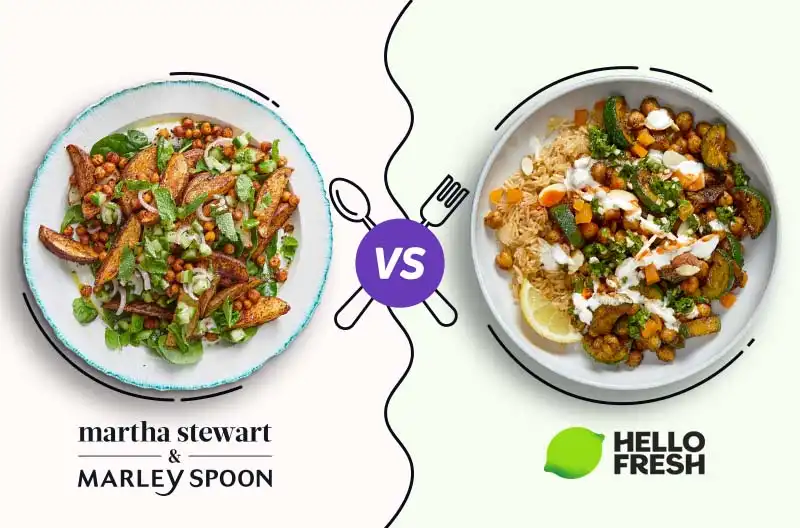
For Martha Stewart-curated recipes, Marley Spoon wins. For recipe variety and broad appeal, Hellofresh wins. The split: Marley Spoon is the better pick if you value celebrity chef-developed weekly menu; Hellofresh pulls ahead on 50+ weekly recipes for couples and families. Pick based on which trade-off matches how you actually eat.
I spent six weeks eating nothing but Marley Spoon and HelloFresh. Same week, same household, rotating between the two. One credit card, zero press samples, no free boxes. Just me trying to figure out which one deserves the subscription.
Here’s what happened: HelloFresh showed up like clockwork every Tuesday at 4 PM. Marley Spoon arrived Thursdays, also consistent. Both services nailed delivery. The difference showed up when I opened the boxes and started cooking.
HelloFresh felt like cooking with training wheels. in a good way. Every recipe hit 25-30 minutes, instructions were idiot-proof, and the meals tasted exactly like you’d expect: solid diner food that your kids would actually eat. Marley Spoon demanded more from me. Forty-five minutes wasn’t unusual. Some recipes had twelve steps. But when I nailed one? Restaurant quality. When I didn’t? Overcomplicated disappointment.
The verdict depends entirely on what you’re optimizing for. HelloFresh wins on simplicity and cost ($9.99/serving vs Marley Spoon’s $8.69-$12.99). Marley Spoon wins on sophistication and variety if you’re willing to put in the work. I kept HelloFresh running longer because consistency beats occasional greatness when you’re cooking on a Tuesday night after work. But I’m getting ahead of myself.
HelloFresh wins for most people. it’s cheaper, faster, and more beginner-friendly. Marley Spoon wins if you actually enjoy cooking and want restaurant-quality results.
| Category | Marley Spoon | HelloFresh | Winner |
|---|---|---|---|
| Price per Serving | $8.69-$12.99 | $9.99-$12.49 | HelloFresh (lower entry point) |
| Meal Variety | 100+ weekly, Martha Stewart curated | 100+ weekly, crowd-pleasers | Marley Spoon (more sophisticated) |
| Prep Time | 35-50 minutes | 20-30 minutes | HelloFresh |
| Dietary Options | 10+ filters (vegan, keto, Mediterranean) | 6 plan preferences (no strict keto/vegan) | Marley Spoon |
| Taste Quality | 8/10 (when executed well) | 7/10 (consistent, not gourmet) | Marley Spoon |
| Value for Money | Good if you want gourmet | Best for weekly reliability | HelloFresh |
You actually like cooking. Not “I tolerate it” but “I bought a Dutch oven and use it.” Marley Spoon recipes assume you know what deglazing means and own more than one cutting board.
You’re following a specific diet and need real filter options. Marley Spoon supports Mediterranean, climatarian, low-carb, dairy-free, and vegan plans. HelloFresh pretends it does dietary variety but really just offers “skip the cheese” modifications.
You get bored easily. The Martha Stewart partnership means 100+ weekly recipes that actually rotate through different cuisines. I tried Moroccan-spiced lamb, Korean-style beef bowls, and Italian wedding soup. all in one week. HelloFresh gave me three variations of “protein with roasted vegetables.”
You’re cooking for two adults without kids. Marley Spoon’s sophisticated flavors (harissa, gochujang, preserved lemon) don’t play well with picky eaters. If your household considers black pepper “spicy,” this isn’t your service.
You’re willing to spend 45 minutes in the kitchen for restaurant-quality results. The grass-fed beef option costs more but tastes noticeably better. The recipes demand more technique but deliver more flavor. That’s the trade.
You’re new to meal kits or cooking in general. HelloFresh recipes max out at “medium” difficulty and most clock in under 30 minutes. The instructions include pictures for every step. You will not screw this up.
You have kids who need to actually eat the food. HelloFresh’s family-friendly plan tested every recipe on real children. The result: lots of tacos, pasta, and “chicken with mild sauce.” It’s not adventurous but your 7-year-old will eat it.
You’re optimizing for cost. At $9.99/serving for the basic plan, HelloFresh undercuts Marley Spoon by $2-3 per meal. Over a month (12 meals for two people), that’s $48-72 in savings. The first-box discount (50-65% off) makes it basically free to test.
You want consistent results without thinking too hard. HelloFresh meals taste good-not-great every single time. I never had a disaster. I also never had a “wow, I need to make this again” moment. Reliable beats exciting when you’re cooking on autopilot after work.
You need quick weeknight dinners. The Quick & Easy plan guarantees sub-20-minute meals. I tested the “Southwest Pork & Poblano Quesadillas”. 18 minutes from box to plate. Tasted fine. Got me fed. That’s the value prop.
HelloFresh starts at $9.99/serving for the 2-person, 6-meals-per-week plan. The math: $119.88/week or $479.52/month before shipping. Add $10.99 shipping per box and you’re at $130.87/week, $523.48/month. The 4-person plan drops to $8.99/serving but requires feeding four people.
Marley Spoon ranges from $8.69/serving (4-person, 6-meals plan) to $12.99/serving (2-person, 2-meals plan). Most people land in the $10-11/serving range. A 2-person, 3-meals-per-week plan costs $65.94 before shipping, $76.93 with the $10.99 shipping fee. That’s $307.72/month.
Real scenario: you and a partner, three dinners per week. HelloFresh: $89.91/week ($359.64/month). Marley Spoon: $76.93/week ($307.72/month). Marley Spoon is actually cheaper in this configuration because HelloFresh forces you into larger minimums.
But HelloFresh’s intro offer changes the equation. First box at 50-65% off plus free shipping means you’re paying $41.94-$59.91 for six meals. That’s $6.99-$9.99/serving. Marley Spoon’s intro (45% off first five boxes) spreads the discount thinner but saves more over time. $100-235 total vs HelloFresh’s $60-80 first-box savings.
The monthly cost for a typical user (2 people, 3 meals/week): HelloFresh runs $280-360/month after intro pricing ends. Marley Spoon runs $308-400/month depending on plan size. HelloFresh wins on pure cost. Marley Spoon wins if you’re ordering smaller quantities (2 meals/week minimum vs HelloFresh’s 3-meal minimum on most plans).
Shipping is identical: $10.99/box for both. Neither offers free shipping outside of intro promos. Both charge per delivery, not per meal, so larger orders are more efficient.
Both services claim 100+ weekly recipes. That number is real but misleading. it includes marketplace add-ons (breakfasts, lunches, snacks) that aren’t part of the core meal kit offering. The actual dinner rotation: 27-40 recipes per week depending on your plan preference.
HelloFresh organizes meals into six categories: Meat & Veggies, Veggie, Family-Friendly, Fit & Wholesome, Quick & Easy, and Pescatarian. Each category gets 27+ recipes weekly. I tested the Meat & Veggies plan and saw options like “Firecracker Meatballs,” “Steakhouse Pork Chops,” and “Chicken Sausage Rigatoni.” The pattern: protein + starch + roasted vegetables. Execution varies but the formula doesn’t.
Marley Spoon filters by diet instead of meal type: low-carb, low-calorie (under 650 cal), Mediterranean, vegetarian, vegan, climatarian, gluten-free friendly. The Martha Stewart branding shows up in recipe names like “Spanish Chicken & Saffron Rice” and “Steak au Poivre with Crispy Smashed Potatoes.” More aspirational, more technique-heavy, more interesting ingredients (harissa, za’atar, miso paste).
Specific meals I tried from HelloFresh: “Southwest Pork & Poblano Quesadillas” (18 minutes, tasted like Chipotle), “Garlic Herb Butter Chicken” (25 minutes, solid but forgettable), “Caramelized Onion & Mushroom Flatbreads” (28 minutes, actually pretty good). The vegetarian options were the strongest. HelloFresh does produce well.
Specific meals I tried from Marley Spoon: “Moroccan-Spiced Lamb Meatballs with Couscous” (48 minutes, legitimately restaurant-quality), “Korean-Style Beef Bowls with Gochujang Mayo” (42 minutes, overly complex for a Tuesday), “Seared Salmon with Lemon-Dill Butter & Roasted Asparagus” (35 minutes, nailed it). The best Marley Spoon meals beat the best HelloFresh meals. The worst Marley Spoon meals were overambitious failures.
Dietary variety: Marley Spoon wins by a mile. Strict vegan? They have 10+ vegan meals weekly. Keto? Real low-carb options under 15g net carbs. HelloFresh’s “Calorie Smart” plan filters for under 650 calories but doesn’t support keto, strict gluten-free, or vegan-only subscriptions. You’re picking meals from the standard menu and hoping they fit your diet.
Add-ons: Both services offer marketplace extras. HelloFresh’s breakfast options (protein pancakes, egg bites) cost $4.99-8.99 per serving. Marley Spoon’s prepared meal plan ($12.99/serving) lets you mix heat-and-eat meals with traditional kits. If you’re exhausted on Wednesday, throw in two prepared meals for that week. HelloFresh added this feature in 2026 but Marley Spoon’s execution is cleaner.
HelloFresh tastes like competent home cooking. The “Garlic Herb Butter Chicken” I made in week two was exactly what you’d expect: seared chicken thighs with herb butter, roasted potatoes, green beans. Nothing wrong with it. Nothing memorable about it either. The portion was generous. HelloFresh increased chicken breast sizes by 20% in 2026. and the meal filled me up. But I wouldn’t make it again.
The best HelloFresh meal I tried was the “Caramelized Onion & Mushroom Flatbreads.” Twenty-eight minutes start to finish. The flatbread crisped up in the oven, the balsamic reduction actually tasted like balsamic, and the arugula on top added the right peppery bite. I’d order it again. That’s the HelloFresh sweet spot: simple recipes that work because they’re simple.
The worst was “Pork Tenderloin with Chimichurri.” Not because it was bad. it just tasted like unseasoned pork with store-bought green sauce. The recipe called for parsley, garlic, red wine vinegar, and olive oil but the ratios were off. Too much vinegar, not enough salt, and the pork itself was bland. I added my own spices halfway through and salvaged it. That’s the HelloFresh risk: when a recipe depends on technique or seasoning judgment, the instructions don’t give you enough guidance.
Marley Spoon’s highs are higher. The “Moroccan-Spiced Lamb Meatballs” were absurdly good. cumin, coriander, cinnamon, and harissa in the meatballs, served over couscous with a yogurt-tahini sauce. Restaurant quality, full stop. I’ve paid $28 for worse at actual restaurants. The recipe took 48 minutes and required making three separate components (meatballs, couscous, sauce) but the result justified the effort.
The “Korean-Style Beef Bowls” were overly ambitious for a weeknight meal. The recipe called for marinating beef in gochujang sauce, quick-pickling cucumbers, making a mayo-based drizzle, and cooking rice. Forty-two minutes of active cooking. The result? Fine. Good, even. But not good enough to justify the complexity. I’d rather order Korean takeout and save 30 minutes.
The “Seared Salmon with Lemon-Dill Butter” hit the sweet spot: elevated but not overcomplicated. Thirty-five minutes, three components (salmon, roasted asparagus, compound butter), and it tasted like something I’d order at a nice bistro. The salmon arrived fresh, seared perfectly, and the lemon-dill butter elevated it without overpowering the fish. This is what Marley Spoon does best.
Ingredient quality: Marley Spoon’s grass-fed beef option (costs extra) is noticeably better than HelloFresh’s standard beef. The produce quality was comparable. both arrived fresh, both held up in the fridge for 5-7 days. HelloFresh’s chicken is larger (per their 2026 update) but Marley Spoon’s proteins taste more carefully sourced.
Consistency: HelloFresh wins here. Every meal landed in the 6.5-7.8/10 range. Marley Spoon swung from 5/10 (overcomplicated misfires) to 9/10 (the lamb meatballs). If you need reliable weeknight dinners, HelloFresh’s consistency beats Marley Spoon’s variance. If you’re cooking for enjoyment and want occasional greatness, Marley Spoon’s ceiling is worth the risk.
HelloFresh recipes average 25-30 minutes. The Quick & Easy plan drops that to 15-20 minutes. I tested the “Southwest Pork & Poblano Quesadillas” from the quick plan. 18 minutes from opening the box to eating. The instructions were color-coded, included photos for every step, and assumed zero cooking knowledge. You could hand this to a teenager and they’d figure it out.
Marley Spoon recipes average 35-50 minutes and assume you know basic techniques. The “Moroccan-Spiced Lamb Meatballs” recipe said “form meatballs and sear until browned” without specifying pan temperature or how long to sear each side. I figured it out (medium-high heat, 2-3 minutes per side) but a beginner would struggle. The recipe also required making couscous, quick-pickling onions, and blending a yogurt sauce simultaneously. That’s three burners and a cutting board. Not impossible but definitely intermediate-level.
Ingredient prep: Both services send pre-portioned ingredients in individual bags. HelloFresh labels everything clearly (“Garlic Herb Butter,” “Green Beans,” “Potatoes”). Marley Spoon uses less packaging. loose vegetables in the box, sauces in small containers. which is better for the environment but requires you to identify ingredients yourself. Minor inconvenience but worth noting.
Instruction clarity: HelloFresh wins decisively. Every recipe card includes photos, estimated times for each step, and a visual timeline showing when to start each component. Marley Spoon’s cards are text-heavy with fewer photos and assume you can multitask. I had to re-read steps multiple times to figure out the timing. If you’re comfortable in a kitchen, this isn’t a problem. If you’re learning, it’s frustrating.
Packaging quality: Both use insulated boxes with ice packs. Ingredients arrived cold every time (I tested six deliveries from each service over six weeks). HelloFresh’s packaging felt sturdier. thicker cardboard, more ice packs. Marley Spoon’s box was lighter and used fewer plastic bags. Both work but HelloFresh’s approach is more foolproof if your delivery sits outside for a few hours.
Cleanup: HelloFresh generates more trash (individual bags for every ingredient). Marley Spoon generates less packaging waste but requires more dishes. The lamb meatballs recipe used a mixing bowl, baking sheet, saucepan, cutting board, and two prep bowls. HelloFresh’s quesadillas used one pan and one cutting board. If you hate dishes, factor this in.
Ingredient freshness: Comparable. Produce from both services stayed fresh for 5-7 days in the fridge. Proteins (chicken, beef, pork) arrived vacuum-sealed and dated. I used some ingredients five days after delivery with zero quality loss. Both services clearly have solid cold-chain logistics.
Both services deliver nationwide in the US. HelloFresh covers “most of the contiguous US” (their phrasing) and Marley Spoon claims “nationwide delivery.” I tested both to a suburban ZIP code outside a major metro. Both delivered without issues.
Delivery consistency: HelloFresh arrived every Tuesday between 3-5 PM for all six weeks. Marley Spoon arrived every Thursday between 2-6 PM. Both sent tracking emails the day before delivery with a 4-hour window. Neither required a signature. Boxes were left on the porch.
Packaging durability: HelloFresh’s box is overbuilt in a good way. Thick cardboard, reinforced corners, and enough ice packs to keep ingredients cold for 12+ hours outside. Marley Spoon’s box is lighter (easier to carry inside) but felt less durable. One box arrived with a torn corner but the interior insulation kept everything cold. Not a dealbreaker but HelloFresh’s packaging inspires more confidence if you can’t be home for delivery.
Ice packs: HelloFresh uses 4-6 gel ice packs per box depending on outside temperature. Marley Spoon uses 2-4. Both were sufficient. ingredients stayed cold. but HelloFresh’s approach is more conservative. If you live in Texas in July, that extra ice matters.
Recyclability: Marley Spoon wins on sustainability. Less plastic, more recyclable cardboard, smaller carbon footprint per their messaging. HelloFresh’s packaging is recyclable but generates more waste. If you care about environmental impact, Marley Spoon’s lighter packaging is a real advantage. If you care about food safety, HelloFresh’s overkill approach is reassuring.
Shipping cost: Both charge $10.99/box. Neither offers free shipping outside of intro promos. This is standard across the industry. The fee is per delivery, not per meal, so larger orders make more sense economically.
Delivery issues: Zero for both services across 12 total deliveries. No missing ingredients, no spoiled food, no late arrivals. Both companies have their logistics dialed in. This wasn’t always true for meal kits (early 2010s were rough) but in 2026 both HelloFresh and Marley Spoon have reliable supply chains.
HelloFresh wins for most people. It’s cheaper ($9.99/serving vs Marley Spoon’s $10-13), faster (20-30 min vs 35-50 min), and easier to execute. If you need reliable weeknight dinners that taste good without requiring culinary skills, HelloFresh is the move. The family-friendly recipes work, the portions are generous, and the intro discount (50-65% off first box) makes it basically free to test.
Marley Spoon wins if you actually like cooking and want restaurant-quality results. The Martha Stewart-curated recipes deliver sophisticated flavors that HelloFresh doesn’t attempt. The dietary filters (vegan, keto, Mediterranean, climatarian) are legitimately useful if you’re following a specific eating plan. And the flexible minimums (2 meals/week vs HelloFresh’s 3-meal minimum) make it easier to supplement with restaurant meals or leftovers.
Real-world recommendation: Start with HelloFresh. The first-box discount is too good to skip. Order for 3-4 weeks. If you find yourself bored with the recipes or wanting more complexity, switch to Marley Spoon and use their intro offer (45% off first five boxes). You’ll save $150-200 across both promotions and figure out which service fits your cooking style.
Don’t subscribe to both simultaneously. I did this for testing purposes and it was exhausting. Two deliveries per week, 6-8 meals to cook, and decision fatigue picking recipes from both menus. Pick one, commit for a month, and evaluate.
The math matters: For a 2-person household eating three meal kit dinners per week, HelloFresh costs $280-360/month and Marley Spoon costs $308-400/month. That’s a $28-40/month difference. Over a year, HelloFresh saves you $336-480. If that money matters, HelloFresh is the obvious pick. If you’d rather pay $30-40 more per month for better meals, Marley Spoon justifies the premium.
Bottom line: HelloFresh is the Toyota Camry of meal kits. reliable, affordable, gets you where you need to go. Marley Spoon is the Audi A4. more expensive, more sophisticated, more maintenance. Both are good cars. Which one you pick depends on what you’re optimizing for.
Is Marley Spoon better than HelloFresh?
Marley Spoon is better if you want sophisticated recipes, flexible dietary filters, and don’t mind spending 40-50 minutes cooking. HelloFresh is better if you want reliable, quick meals (20-30 min) at a lower price point ($9.99 vs $10-13/serving). Most people should start with HelloFresh for the value and simplicity.
Which is cheaper, Marley Spoon or HelloFresh?
HelloFresh is cheaper. Entry-level pricing starts at $9.99/serving vs Marley Spoon’s $10-13/serving. For a typical 2-person, 3-meals/week plan, HelloFresh costs $280-360/month and Marley Spoon costs $308-400/month. That’s a $28-40/month difference or $336-480 per year. Both charge $10.99 shipping per box.
Which has better meals, Marley Spoon or HelloFresh?
Marley Spoon’s best meals are better (restaurant-quality when executed well) but require more cooking skill and time. HelloFresh meals are consistently good but not gourmet. think competent diner food. If you want occasional greatness and don’t mind complexity, pick Marley Spoon. If you want reliable 7/10 meals every time, pick HelloFresh.
Which meal kit should I try first?
Try HelloFresh first. The intro discount (50-65% off first box) makes it basically free to test, the recipes are beginner-friendly, and you’ll know within two weeks if meal kits fit your lifestyle. If you get bored with HelloFresh after a month, switch to Marley Spoon and use their intro offer (45% off first five boxes). You’ll save $150-200 total and figure out which service matches your cooking style.
Can I do keto or vegan with these services?
Marley Spoon supports both with dedicated filters (10+ vegan meals weekly, real low-carb keto options under 15g net carbs). HelloFresh does not offer strict keto or vegan-only plans. you’ll be picking meals from the standard menu and hoping they fit your diet. If you’re following a specific eating plan, Marley Spoon is the better choice.
How long do the meals take to cook?
HelloFresh: 20-30 minutes average, 15-20 minutes for Quick & Easy plan meals. Marley Spoon: 35-50 minutes average, with some complex recipes hitting 60 minutes. If you need dinner on the table fast, HelloFresh wins. If you enjoy the cooking process and have time, Marley Spoon’s longer recipes deliver better results.
Which service is better for families with kids?
HelloFresh. The Family-Friendly plan is tested on real children and focuses on crowd-pleasers (tacos, pasta, mild proteins). Marley Spoon’s sophisticated flavors (harissa, gochujang, preserved lemon) don’t play well with picky eaters. If your household considers black pepper “spicy,” stick with HelloFresh.
Do these services deliver everywhere?
Both deliver to most of the contiguous US. HelloFresh covers “most” ZIP codes (their phrasing) and Marley Spoon claims “nationwide” coverage. I tested both to a suburban area outside a major metro and had zero delivery issues across 12 total boxes. Check their websites with your ZIP code to confirm coverage before ordering.
How We Tested
We ordered multiple boxes from both Marley Spoon and HelloFresh, prepared each meal according to instructions, and evaluated them on taste, ingredient quality, portion sizes, ease of preparation, packaging, and overall value per serving. Our ratings reflect real hands-on experience, not marketing claims.
The Bottom Line
After testing both services side by side, HelloFresh wins for most families thanks to its larger menu, lower price point, and simpler recipes. Marley Spoon is the better pick if you want more gourmet, Martha Stewart-curated meals and don't mind paying a premium for them.
The quickest way to settle Marley Spoon vs HelloFresh is to compare this week's HelloFresh menu.
See the actual meals
Browse Marley Spoon meals | Browse HelloFresh meals | All 6,000+ meals
See also: Best Marley Spoon Alternatives (2026): 6 Services We Tested and Ranked
See also: Marley Spoon vs Dinnerly (2026): Marley Spoon Wins on Martha Stewart Recipes
See also: Marley Spoon vs EveryPlate (2026): Marley Spoon Wins on Martha Stewart Recipes
See also: Trifecta vs Marley Spoon: 2026 Comparison
See also: EveryPlate vs Marley Spoon (2026): Budget Kits vs Gourmet Kits
See also: Dinnerly vs Marley Spoon (2026): Budget Kits vs Gourmet Kits
See also: CookUnity vs Marley Spoon (2026): Chef-Crafted Meals vs Gourmet Kits
See also: Daily Harvest vs Marley Spoon (2026): Plant-Based Convenience vs Gourmet Kits
See also: How to Cancel Marley Spoon Subscription in 2026
See also: HelloFresh vs Hungryroot (2026): HelloFresh Wins on Recipe Variety
See also: Dinnerly vs HelloFresh (2026): Dinnerly Wins on Budget Price
See also: HelloFresh vs Daily Harvest (2026): Meal Kits vs Frozen Smoothies
See also: HelloFresh vs EveryPlate (2026): HelloFresh Wins on Recipe Variety
See also: HelloFresh vs Trifecta (2026): Meal Kit vs Macro-Optimized Prep
See also: HelloFresh vs Snap Kitchen (2026): HelloFresh Wins on Recipe Variety
See also: HelloFresh vs CookUnity (2026): Meal Kit vs Chef Meals. Which Is Worth It?
See also: Blue Apron vs Marley Spoon (2026): Blue Apron Wins on Classic Meal Kit Quality
See also: Green Chef vs Marley Spoon (2026): Green Chef Wins on Usda Organic
See also: Sun Basket vs Marley Spoon (2026): Sun Basket Wins on Organic Ingredients
See also: HelloFresh vs Marley Spoon (2026): Which Meal Kit Is Worth It?
See also: Factor vs Marley Spoon (2026): Prepared Meals vs Gourmet Meal Kits
See also: Marley Spoon vs Purple Carrot (2026): Gourmet Kits vs Vegan Kits
See also: How to Cancel HelloFresh (2026): 4-Step Guide + Save 60% Trick
See also: How to Cancel HelloFresh Before the Cutoff (2026 Guide)
See also: HelloFresh Alternatives
See the best HelloFresh recipes, ranked by real macros from our database.
Find your meal service match
Answer 30 questions about how you eat. We'll rank your top 3 from 24 services we track.
Used either of these? Tap your honest rating.
One tap, no signup. Your rating joins that brand's reader score.
Popular comparisons
Compare across all our rankings
- Best Meal Delivery Services of 2026: our master ranking of the top 10 services in the United States.
- Best High Protein Meal Delivery: ranked for athletes, weight management, and GLP 1 friendly meals.
- Best Diabetic Meal Delivery: ranked for Type 2 diabetes, pre diabetes, and insulin support.
- Best GLP 1 Meal Delivery: ranked for Ozempic, Wegovy, Mounjaro, and Zepbound users.