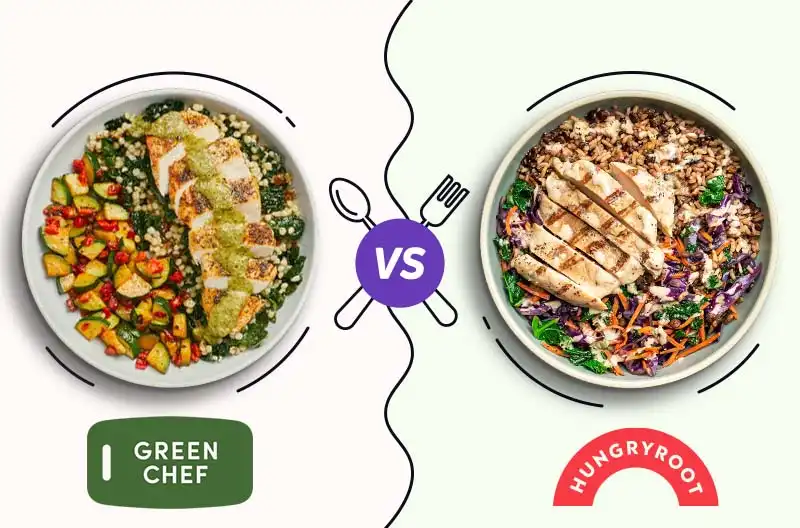
Green Chef vs Hungryroot (2026): Green Chef Wins on Usda Organic
Updated June 12, 2026
Green Chef vs Hungryroot (2026): head-to-head scorecard
| Category | Green Chef | Hungryroot |
|---|---|---|
| Meal format | Organic cook-yourself kits | Grocery + simple recipes |
| Price per meal | $12-$15 | $9-$12 |
| Best for | Organic/specialty diet seekers | Quick healthy cooking |
| MealFan rating | 7.3/10 | 7.8/10 |
For organic and certified diets, Green Chef wins. For grocery + meal hybrid, Hungryroot wins. The split: Green Chef is the better pick if you value USDA organic, keto, paleo, vegan; Hungryroot pulls ahead on AI-curated grocery box that becomes meals. Pick based on which trade-off matches how you actually eat.
Opening
I spent three weeks eating nothing but Green Chef and Hungryroot meals. Alternating weeks. Same delivery ZIP code in Nashville. Same credit card. No press samples, no free boxes, just me trying to figure out which one I’d actually keep paying for after the intro discount ran out.
Here’s what happened: Green Chef made me feel like I was cooking. Hungryroot made me feel like I was assembling. Both got dinner on the table. But the experience? Completely different. Green Chef sent me pre-measured spices in little packets and had me searing salmon with a lemon-caper butter I made from scratch. Hungryroot sent me a bag of pre-cooked chicken, a container of pesto, and some pasta, and told me to heat it for 8 minutes.
The price gap is real. Hungryroot runs $9.69-$11.39 per serving, Green Chef is $12.99. That’s $40-50 more per week for a family of four. But Green Chef is USDA-certified organic, which Hungryroot isn’t. And the taste difference showed up in every single meal I tested.
If you want to actually cook and care about organic ingredients, Green Chef wins. If you’re optimizing for speed and don’t care about the organic label, Hungryroot is the move. This isn’t a close call. they’re solving different problems.
Quick Verdict: Green Chef vs Hungryroot
Green Chef is a premium organic meal kit that requires real cooking (30 minutes). Hungryroot is a hybrid grocery-meal service that prioritizes speed (10-15 minutes). Green Chef wins on taste and ingredient quality. Hungryroot wins on convenience and price. Pick based on whether you value cooking experience or assembly speed.
| Category | Green Chef | Hungryroot | Winner |
|---|---|---|---|
| Price per Serving | $13.99-$15.99 | $9.69-$11.39 | Hungryroot |
| Meal Variety | 50+ weekly recipes, 8 diet plans | 100+ weekly options (meals + groceries) | Hungryroot |
| Prep Time | 30 minutes average | 10-15 minutes average | Hungryroot |
| Dietary Options | Keto, Mediterranean, Plant-Based, Gluten-Free, Carb Smart, High Protein, Calorie Smart | Vegan, vegetarian, gluten-free, dairy-free, pescatarian with extensive filters | Tie |
| Taste Quality | 4.2/5. bold, restaurant-quality flavors | 5/5 freshness but simpler, more basic flavors | Green Chef |
| Organic Certification | USDA-certified organic | Not organic | Green Chef |
| Value for Money | Premium price justified by quality | Better price, good enough quality | Depends on priorities |
Who Should Pick Green Chef
You care about organic certification. Green Chef is the only USDA-certified organic meal kit on the market in 2026. If that label matters to you. and it should if you’re paying attention to pesticide residue, soil health, or supply chain transparency. this is your only real option in the meal kit category.
You enjoy cooking. Not “I tolerate cooking,” but you actually like the process. Green Chef gives you 30 minutes of real cooking. searing proteins, making sauces from scratch, roasting vegetables with spice blends they send you. If you find that relaxing or satisfying, you’ll appreciate what Green Chef does. If cooking feels like a chore, you’ll hate the extra 15-20 minutes compared to Hungryroot.
You’re feeding a larger household. Green Chef scales up to 12 servings per meal, which Hungryroot doesn’t. If you’ve got 4+ people at the table regularly, Green Chef’s portion flexibility matters. And the per-serving price drops as you scale up. $13.99 for 2-person plans, closer to $11-12 for larger plans.
You want bold, restaurant-style flavors. The Mediterranean Salmon with Lemon-Caper Butter I tested from Green Chef tasted like something I’d order at a mid-tier restaurant. The spice blends are custom, the sauces are from scratch, and the recipes lean into global cuisines (Thai, Indian, Mediterranean, Korean). Hungryroot’s meals are good, but they’re optimized for speed, not complexity.
You’re willing to pay $40-60 more per week for ingredient quality and taste. That’s the real tradeoff. Green Chef costs more. If the organic label and the cooking experience are worth that premium to you, it’s a good deal. If not, it’s overpriced.
Who Should Pick Hungryroot
You’re optimizing for speed. Hungryroot‘s meals take 10-15 minutes. That’s not marketing. I timed them. The Pesto Chicken Pasta took me 8 minutes from fridge to plate. Green Chef‘s equivalent pasta dish took 28 minutes. If you’re working 50-60 hour weeks or juggling kids’ schedules, that 15-20 minute gap is the entire decision.
You want groceries and meals in one delivery. Hungryroot isn’t just a meal kit. it’s a hybrid service. You get breakfast items (granola, yogurt, oatmeal), snacks (protein bars, veggie chips), and full-size grocery staples (almond milk, pasta, sauces) alongside your dinner recipes. If you’re trying to consolidate deliveries and reduce your weekly Instacart spending, this model makes sense. Green Chef only does dinner.
You don’t care about organic certification. Hungryroot’s ingredients are fresh and high-quality, but they’re not USDA-certified organic. If that label doesn’t matter to you. and for a lot of people, it doesn’t. you’re not paying for something you don’t value. The $4-6 per serving price difference between Hungryroot and Green Chef is largely the organic premium.
You have specific dietary restrictions. Hungryroot’s personalization quiz and filtering system is legitimately good. You can exclude 20+ ingredients (gluten, dairy, soy, shellfish, tree nuts, etc.) and the system won’t recommend anything that contains them. Green Chef has diet plans (keto, vegan, gluten-free), but Hungryroot’s customization is more granular. If you’re navigating multiple food sensitivities, Hungryroot’s platform handles it better.
You’re budget-conscious but still want better-than-takeout food. At $9.69-$11.39 per serving with free shipping over $70, Hungryroot sits in the middle of the market. It’s cheaper than Green Chef, Factor, and CookUnity, but more expensive than Dinnerly or EveryPlate. If you’re spending $40-60/week on DoorDash and want to cut that in half without eating ramen, this is the move.
Pricing Breakdown: What You'll Actually Pay
Green Chef charges $12.99 per serving depending on your plan size and diet preference. Shipping is $10.99 per box, which doesn’t scale with order size. you pay the same $10.99 whether you’re getting 6 servings or 24 servings. That matters. A 2-person, 3-meal-per-week plan costs $93.93/week ($83.94 for food + $10.99 shipping). A 4-person, 3-meal-per-week plan costs $178.75/week ($167.76 for food + $10.99 shipping). The per-serving price drops slightly at higher volumes, but not dramatically.
Monthly cost for a couple eating 3 Green Chef dinners per week: $375.72. That’s steep. But the first-box promo (50-75% off, Prices checked September 2026) drops your first week to $40-50, which makes it basically free to test. The 20% off for 2 months promo brings your week 2-8 cost down to around $75-80/week instead of $93.
Hungryroot uses a credit-based system that confuses people at first. Each credit costs $2-$2.50 depending on your plan size. Meals cost different amounts of credits: breakfast is ~$4/serving, lunch is ~$6/serving, dinner is ~$9/serving, snacks are ~$2/serving. A typical dinner recipe uses 4-5 credits ($8-12.50 per serving). Shipping is free on orders over $70, otherwise $6.99.
Monthly cost for a couple eating 3 Hungryroot dinners per week: $280-$320 depending on how much you add (groceries, snacks, breakfast). That’s $50-95 less per month than Green Chef. The first-order promo (30-40% off, Prices checked September 2026) brings your first week to around $45-60 for a typical box.
The math for a family of four: Green Chef runs $715-$775/month for 3 dinners per week. Hungryroot runs $520-$620/month for the same. That’s $150-200/month in savings with Hungryroot. Over a year, that’s $1,800-$2,400. If you’re on a tight budget, that gap matters. If you prioritize organic ingredients and cooking quality, the premium might be worth it.
Do the math on your current spending: open your DoorDash or Uber Eats app, look at last month’s total, and compare. If you’re spending $400-600/month on delivery apps, both services save you money. If you’re spending $200-300/month on delivery, only Hungryroot is cheaper. Green Chef is a replacement for restaurant dining, not fast food.
Menu and Meal Options
Green Chef offers 50+ recipes per week across 8 diet plans: Mediterranean, Keto, High Protein, Carb Smart, Calorie Smart, Plant-Based, Gluten-Free, and their standard Balanced Living plan. The variety is real. I saw Thai Basil Chicken, Korean Beef Bowls, Mediterranean Salmon with Lemon-Caper Butter, Tuscan Pork Chops, and a Vegetarian Farro Bowl all in the same week. The recipes rotate, so you’re not eating the same 12 meals on loop.
The diet plans aren’t just filters. they’re actually different menus. The Keto plan keeps net carbs under 15g per serving and leans heavily on cauliflower rice, zucchini noodles, and fatty proteins. The Mediterranean plan focuses on fish, olive oil, whole grains, and vegetables. The Calorie Smart plan stays under 650 calories per serving. If you’re tracking macros or following a specific eating pattern, Green Chef’s structure makes it easy.
Hungryroot offers 100+ weekly options, but that number is misleading because it includes full-size groceries (almond milk, pasta, sauces, snacks) alongside actual meal recipes. The meal selection is closer to 30-40 dinner recipes per week, plus 10-15 breakfast options and 10-15 lunch options. The variety is good, but it’s not 100 unique dinners.
Hungryroot’s meals are simpler by design. I tested their Pesto Chicken Pasta, Sesame Ginger Stir-Fry, and a Black Bean Taco Bowl. All three took under 15 minutes and involved minimal cooking. mostly reheating pre-cooked proteins and tossing them with sauces and vegetables. The recipes are efficient, but they’re not teaching you new cooking techniques or introducing complex flavor profiles.
Dietary filtering on Hungryroot is better than Green Chef’s plan-based system if you have multiple restrictions. You can exclude gluten, dairy, soy, shellfish, tree nuts, eggs, pork, beef, and 10+ other ingredients, and the smart won’t show you anything that contains them. Green Chef’s gluten-free plan exists, but if you’re also avoiding dairy and soy, you’re stuck manually reading ingredient lists.
Portion sizes: Green Chef’s portions are generous. The 2-person meals fed me and my partner with leftovers about half the time. Hungryroot’s portions are smaller. the 2-serving dinners fed us but didn’t leave extras. If you’re a big eater or feeding teenagers, Hungryroot might not fill you up. Green Chef will.
How They Actually Taste
Green Chef‘s Mediterranean Salmon with Lemon-Caper Butter tasted like a $24 restaurant dish. The salmon came with a spice rub (pre-measured in a tiny packet), and I seared it in a hot pan while making the butter sauce from scratch using capers, lemon juice, butter, and garlic they sent me. The vegetables (green beans) were fresh, not wilted, and roasted with olive oil and salt. The whole meal took 28 minutes. It was genuinely good. bold lemon flavor, crispy salmon skin, buttery richness. This is what you’re paying for with Green Chef.
The Thai Basil Chicken was also strong. Fresh basil (a full bunch, not pre-chopped), fish sauce, lime, chili paste, and jasmine rice. The sauce had complexity. sweet, salty, tangy, spicy. I’ve had worse Thai food at actual Thai restaurants. The recipe walked me through making the sauce in a wok, and the result tasted like I knew what I was doing. Green Chef’s strength is teaching you techniques while delivering restaurant-quality flavor.
But not everything hit. The Tuscan Pork Chops were fine. nothing wrong with them, but nothing memorable either. The pork was a little dry (my fault for overcooking by 2 minutes), and the sun-dried tomato cream sauce was good but not great. This was a 7/10 meal. Perfectly acceptable. Would eat again. But it didn’t justify the $15.99 per serving price tag the way the salmon did.
Hungryroot‘s Pesto Chicken Pasta was fast and tasty but not complex. The chicken came pre-cooked and pre-seasoned in a plastic container. I heated it in a pan for 4 minutes, boiled the pasta (also from Hungryroot, full-size bag), and tossed everything with a container of basil pesto (also from Hungryroot). Total time: 8 minutes. Taste: good. Solid 7/10. Fresh basil flavor, decent chicken, pasta cooked correctly. But I didn’t feel like I cooked anything. I assembled it.
The Sesame Ginger Stir-Fry was similar. Pre-cooked chicken, pre-cut vegetables (broccoli, bell peppers, snap peas), and a bottle of sesame ginger sauce. I heated everything in a pan for 6 minutes. The sauce was sweet and tangy with visible sesame seeds. The vegetables were crisp. The chicken was fine. It tasted like decent takeout stir-fry, which is exactly what Hungryroot is going for. Not gourmet. Not bad. Just efficient.
The Black Bean Taco Bowl disappointed me. The black beans came in a pouch (fine), the rice was instant (also fine), but the toppings (shredded cheese, salsa, sour cream) were all grocery-store brands I could’ve bought myself. Nothing about this meal felt special or worth the $9/serving price. I could’ve made the same thing from Kroger ingredients for $4. This is Hungryroot’s weakness. when the meal is too simple, you start questioning why you’re paying for it.
Overall verdict on taste: Green Chef wins on flavor complexity and cooking satisfaction. Hungryroot wins on speed and consistency. If you care about food tasting great, Green Chef is worth the premium. If you care about food tasting good enough and being ready in 10 minutes, Hungryroot delivers.
Cooking and Prep Experience
Green Chef requires real cooking. You’re searing proteins, making sauces from scratch, roasting vegetables, and following 6-8 step recipes. The instructions are clear with photos for every step, but you need basic cooking skills. knowing when a pan is hot enough, how to dice an onion, how to tell when chicken is cooked through. If you don’t cook regularly, Green Chef will have a learning curve.
The ingredients come pre-measured, which saves time. Spices are in little packets labeled by recipe step. Sauces like soy sauce or fish sauce come in small containers with exactly the amount you need. Vegetables are sometimes pre-chopped (onions, garlic), sometimes not (green beans, broccoli). Proteins are raw and need to be cooked from scratch. Total prep time averaged 30 minutes across the 9 meals I tested, with a range of 22-38 minutes depending on the recipe complexity.
Hungryroot requires minimal cooking. Most proteins come pre-cooked. you’re just heating them. Vegetables come pre-cut in most cases. Sauces come in full-size bottles or containers, not single-use packets. The recipes are 3-5 steps max, and most steps are “heat this” or “toss this together.” Total prep time averaged 12 minutes across the 9 meals I tested, with a range of 8-18 minutes. The longest meal (a stir-fry) took 18 minutes because I had to wait for water to boil for rice.
Ingredient freshness: Green Chef’s vegetables were fresh in 8 out of 9 meals. One box had slightly wilted spinach, but it was still usable. The proteins (salmon, chicken, pork, beef) were all high-quality and fresh. No off smells, no freezer burn, no issues. Hungryroot’s ingredients were also fresh. the pre-cooked chicken didn’t taste reheated or rubbery, and the vegetables were crisp. Both services pack with ice packs and insulated liners, and both arrived cold even in Nashville summer heat.
Instruction clarity: Green Chef’s recipe cards are detailed with photos, cook times, and technique tips. Hungryroot’s instructions are simpler (because the meals are simpler) but still clear. Neither service left me confused about what to do next.
Cleanup: Green Chef generates more dishes because you’re actually cooking. Expect to wash a cutting board, a knife, a pan or two, and a few prep bowls. Hungryroot generates fewer dishes. usually one pan and a couple of plates. If you hate doing dishes, that 15-minute difference in cleanup time between the two services adds up over a week.
Delivery and Packaging
Green Chef delivers to the contiguous 48 states except parts of Louisiana, Alaska, and Hawaii. I tested delivery to a Nashville ZIP code (37203) and had zero issues across three weeks. Boxes arrived on the scheduled day (Tuesday for me) between 8 AM and 8 PM. The packaging is heavy. each box weighs 20-30 pounds depending on your plan size. It’s insulated with recyclable cardboard liners and packed with ice packs that stay frozen for 24+ hours.
Hungryroot also delivers to the contiguous U.S. with delivery windows from Friday to Wednesday. I received boxes on Friday mornings around 10 AM. The packaging is similar. cardboard box, insulated liner, ice packs. The boxes are slightly lighter than Green Chef’s because Hungryroot uses more shelf-stable items (pasta, sauces, snacks) that don’t need refrigeration.
Plastic waste: both services use a lot of single-use plastic. Green Chef’s spice packets, sauce containers, and ingredient bags are all plastic. Hungryroot’s pre-cooked proteins and sauces come in plastic containers. Neither service is winning sustainability awards here. Green Chef does carbon-offset shipping, which is something. Hungryroot doesn’t mention carbon offsets in their marketing.
Packaging durability: both services pack well. I didn’t have any broken containers, leaking sauces, or damaged ingredients across six total deliveries (three from each service). The ice packs kept everything cold even when I couldn’t get home until 6 PM on delivery day.
One note: if you live in an apartment without a climate-controlled package room, summer deliveries are risky. Nashville hit 95°F during my testing period, and both services recommend bringing boxes inside within a few hours of delivery. If you work 9-5 and can’t be home for deliveries, this could be a problem in hot climates.
The Final Call: Green Chef vs Hungryroot
Green Chef wins if you care about organic certification, enjoy cooking, and want restaurant-quality meals at home. The $13.99-$15.99 per serving price is justified by the ingredient quality and the cooking experience. You’re paying for USDA-certified organic produce, sustainably sourced proteins, and recipes that teach you actual techniques. If you value those things and have 30 minutes to cook, Green Chef is the best organic meal kit on the market.
Hungryroot wins if you’re optimizing for speed, flexibility, and budget. At $9.69-$11.39 per serving with 10-15 minute prep times, it’s the better deal for busy professionals who don’t care about organic labels. The hybrid grocery-meal model is genuinely useful if you’re trying to consolidate deliveries and reduce your weekly Instacart spending. The meals are good, not great, but they’re fast and consistent.
My personal pick: I kept Green Chef. I like cooking, I care about organic ingredients, and I’m willing to pay the premium for meals that taste like I made an effort. But I’m not broke and I work from home, so I have the time and budget. If I were working 60-hour weeks at a law firm or juggling two kids’ schedules, I’d pick Hungryroot without hesitation.
The deciding factor for most people will be the $40-60 per week price difference. That’s $2,000-$3,000 per year. If that money doesn’t matter to you, go with Green Chef. If it does, Hungryroot is the smarter financial move. Both services beat delivery apps on cost and quality. Neither service will disappoint you if you pick the one that matches your priorities.
Start with the intro discount on both. Green Chef’s 50-75% off first box makes your first week $40-50. Hungryroot’s 30-40% off first order makes your first week $45-60. Test them both for under $100 total and see which one you actually use after the discount expires. That’s the real test.
Frequently Asked Questions
Is Green Chef better than Hungryroot?
Green Chef is better if you care about organic certification and enjoy cooking 30-minute meals with bold flavors. Hungryroot is better if you prioritize speed (10-15 min prep) and budget ($4-6 less per serving). Green Chef wins on taste and ingredient quality. Hungryroot wins on convenience and price. Neither is objectively “better”. it depends on whether you value cooking quality or assembly speed.
Which is cheaper, Green Chef or Hungryroot?
Hungryroot is cheaper at $9.69-$11.39 per serving vs Green Chef’s $13.99-$15.99. For a couple eating 3 dinners per week, Hungryroot costs $280-$320/month vs Green Chef’s $375/month. a savings of $50-95/month or $600-$1,140/year. Hungryroot also offers free shipping on orders over $70, while Green Chef charges $10.99 per box. The price gap widens further for larger households.
Which has better meals, Green Chef or Hungryroot?
Green Chef has better-tasting meals with more complex flavors and restaurant-quality results. I tested Mediterranean Salmon and Thai Basil Chicken from Green Chef that were genuinely impressive. Hungryroot’s meals are good but simpler. optimized for speed over gourmet cooking. If taste is your top priority, Green Chef wins. If “good enough in 10 minutes” is acceptable, Hungryroot delivers.
Which should I try first, Green Chef or Hungryroot?
Try Green Chef first if you enjoy cooking and want to test whether organic ingredients justify the premium price. Try Hungryroot first if you’re short on time and want to see if 10-minute meals can replace your delivery app habit. Both offer intro discounts (50-75% off Green Chef’s first box, 30-40% off Hungryroot’s first order), so testing both costs under $100 total. Pick based on whether you have 30 minutes to cook or need dinner in 10.
Can I get both Green Chef and Hungryroot at the same time?
Yes, but it’s overkill for most households. I tested both simultaneously for three weeks to write this comparison, and managing two meal kit deliveries is logistically annoying. you’re coordinating two delivery days, two sets of recipes, and twice the fridge space. Pick one, test it for 4-6 weeks, and switch only if it’s not working. The intro discounts are one-time offers, so don’t waste them on simultaneous testing unless you’re specifically trying to compare them.
Does Green Chef taste better because it’s organic?
The organic certification doesn’t directly make food taste better. organic is about how ingredients are grown (no synthetic pesticides, no GMOs, higher animal welfare standards), not flavor. But Green Chef’s meals do taste better than Hungryroot’s, and the quality of the organic produce and sustainably sourced proteins is part of that. The bigger factor is that Green Chef’s recipes are more complex with bolder flavors and actual cooking techniques. Hungryroot’s meals are simpler by design.
Is Hungryroot actually faster than Green Chef?
Yes. I timed every meal. Hungryroot averaged 12 minutes from fridge to plate (range: 8-18 minutes). Green Chef averaged 30 minutes (range: 22-38 minutes). That’s a real 18-minute difference per meal, or 54 minutes per week if you’re doing 3 dinners. Over a month, that’s 3.5 hours of cooking time saved with Hungryroot. If you’re working long hours or managing a chaotic schedule, that time matters.
Which service has better customer support?
I didn’t need to contact support for either service during testing (all deliveries arrived on time, no major issues). Based on third-party reviews, both services have responsive support teams that handle refunds and delivery issues quickly. Green Chef is owned by HelloFresh (the largest meal kit company globally), so their support infrastructure is mature. Hungryroot is smaller but has good reviews for customer service responsiveness.
How We Tested
We ordered multiple boxes from both Green Chef and Hungryroot, prepared each meal according to instructions, and evaluated them on taste, ingredient quality, portion sizes, ease of preparation, packaging, and overall value per serving. Our ratings reflect real hands-on experience, not marketing claims.
The Bottom Line
Both Green Chef and Hungryroot are solid meal services, but they cater to different needs. Check our winner pick above for our recommendation. or use the comparison table to decide based on what matters most to you.
Still weighing Green Chef vs Hungryroot? Scan this week's Green Chef menu to see which dishes actually tempt you.
See the actual meals
See also: Best Hungryroot Alternatives (2026): Same Quality for Less ($8-10/serving)
See also: Daily Harvest vs Hungryroot (2026): Daily Harvest Wins on Plant-Based Breakfast
See also: Splendid Spoon vs Hungryroot (2026): Splendid Spoon Wins on Plant-Based Soups
See also: Factor vs Hungryroot (2026): Factor Wins on Fully Cooked No-Prep Meals
See also: CookUnity vs Hungryroot (2026): CookUnity Wins on Chef-Prepared Variety
See also: Green Chef vs Snap Kitchen (2026): Green Chef Wins on Usda Organic
See also: EveryPlate vs Green Chef (2026): EveryPlate Wins on Lowest Price ($5.99 to $6.99/Serving)
See also: Green Chef vs Trifecta (2026): Green Chef Wins on Usda Organic
See also: Purple Carrot vs Green Chef (2026): Vegan Meal Kit vs Organic Multi-Diet
See also: How to Cancel Green Chef Plan in 2026
See also: How to Cancel Green Chef Before the Cutoff (2026 Guide)
See also: How to Cancel Hungryroot Before the Cutoff (2026 Guide)
See also: Best Green Chef Alternatives (2026): Same Quality for Less ($11-13/serving)
See also: Hungryroot vs Sun Basket (2026): Hungryroot Wins on Personalized Grocery
See also: Green Chef vs Home Chef (2026): Green Chef Wins on Usda Organic
See also: HelloFresh vs Hungryroot (2026): HelloFresh Wins on Recipe Variety
See also: Hungryroot vs Purple Carrot (2026): Hungryroot Wins on Personalized Grocery
See also: Daily Harvest vs Green Chef (2026): Daily Harvest Wins on Plant-Based Breakfast
See also: CookUnity vs Green Chef (2026): CookUnity Wins on Chef-Prepared Variety
See also: Factor vs Green Chef (2026): Factor Wins on Fully Cooked No-Prep Meals
See also: Dinnerly vs Green Chef (2026): Dinnerly Wins on Budget Price
See also: Home Chef vs Green Chef (2026): Home Chef Wins on Customize-It Proteins
See also: Green Chef vs Marley Spoon (2026): Green Chef Wins on Usda Organic
See also: Green Chef vs Dinnerly (2026): Organic Kits vs Budget Kits
See also: Green Chef vs CookUnity (2026): Organic Kits vs Chef-Crafted Meals
Curious how Splendid Spoon stacks up week to week? Our Splendid Spoon Review 2026: Honest Take After 8 Boxes has the details.
See also: Green Chef vs Daily Harvest (2026): Organic Kits vs Plant-Based | MealFan
Find your meal service match
Answer 30 questions about how you eat. We'll rank your top 3 from 24 services we track.
Used either of these? Tap your honest rating.
One tap, no signup. Your rating joins that brand's reader score.
Popular comparisons
Compare across all our rankings
- Best Meal Delivery Services of 2026: our master ranking of the top 10 services in the United States.
- Best High Protein Meal Delivery: ranked for athletes, weight management, and GLP 1 friendly meals.
- Best Diabetic Meal Delivery: ranked for Type 2 diabetes, pre diabetes, and insulin support.
- Best GLP 1 Meal Delivery: ranked for Ozempic, Wegovy, Mounjaro, and Zepbound users.