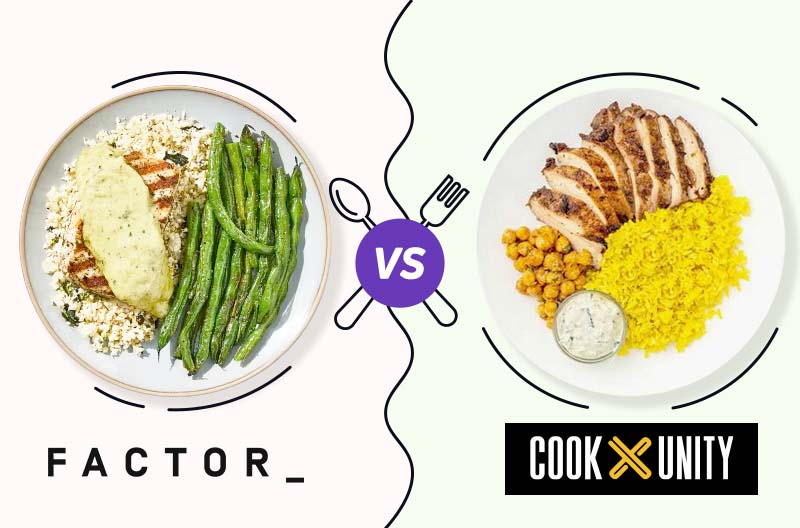









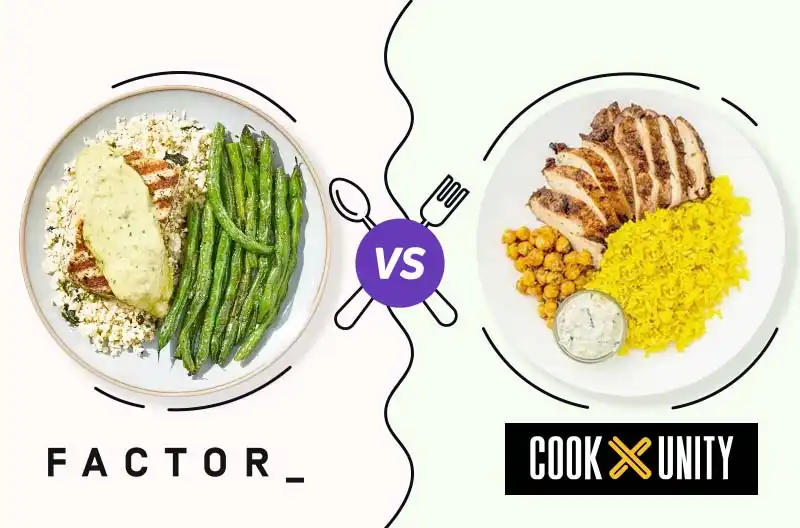
I spent $847 testing Factor and CookUnity over six weeks. Ate nothing but their meals for breakfast, lunch, and dinner. Tracked every dollar, every meal, every moment I wished I’d just ordered Chipotle instead.
The verdict? Factor wins on convenience and macro tracking. CookUnity wins on taste and variety. But here’s what matters: if you’re eating these meals five days a week, CookUnity’s 300-dish rotation keeps you from hating your life by week three. Factor’s 100 meals start feeling samey around day 12, even when the macros are perfect.
Both are ready-to-eat. Both skip the cooking. Both cost more than frozen Trader Joe’s but less than your DoorDash habit. The real question isn’t which is “better”. it’s which one matches how you actually eat. Let’s do the math.
Quick Verdict: Factor vs CookUnity
Factor is the structured eating tool. CookUnity is the restaurant replacement. Different missions, different winners depending on what you need.
| Category | Factor | CookUnity | Winner |
|---|---|---|---|
| Price per Serving | $11.49-$13.99 | $10.39-$14.23 | CookUnity (on large plans) |
| Meal Variety | 100+ weekly options | 300+ weekly options | CookUnity (not close) |
| Prep Time | 2-3 minutes (microwave) | 2 min microwave / 10-15 min oven | Factor (faster) |
| Dietary Options | 6 diet plans, macro-focused | 9 diet filters, flavor-focused | Factor (for tracking) |
| Taste Quality | Solid, predictable | Restaurant-quality | CookUnity (clear winner) |
| Coverage | 48 states nationwide | Major metros only | Factor (reach) |
| Value for Money | Best for macro goals | Best for food experience | Tie (different use cases) |
Who Should Pick Factor
You track macros in MyFitnessPal. Every meal needs to hit 30-50g protein without thinking about it. You’re doing a cut, prepping for a race, or just trying to eat 180g protein daily without living at the gym.
Factor’s meals come with nutrition labels that actually match what’s in the container. The Protein Plus line delivers 30-50g per meal, consistently. No guessing, no “approximately,” no chef deciding to add extra oil because it tastes better. If you need 40g protein and 450 calories, Factor gives you exactly that.
Also pick Factor if you live outside major metros. CookUnity doesn’t deliver to Boise or Knoxville or anywhere the chef economy hasn’t reached yet. Factor ships to all 48 contiguous states, which matters when you’re in Nebraska and still want food that isn’t Applebee’s.
The free 20-minute nutrition coaching session is legitimately useful if you’re new to structured eating. They’ll build a meal plan based on your goals, not just upsell you on more boxes.
Skip Factor if you care deeply about food being interesting. The meals are fuel. They’re good fuel, but they’re still fuel.
Who Should Pick CookUnity
You miss restaurants. Not the $200 tasting menu you did once for your anniversary. the regular Tuesday night spot where you knew the menu and trusted the kitchen.
CookUnity’s 70+ chefs include actual Food Network people and Michelin-starred cooks who moved to the meal delivery model. The difference shows up in the food. The Thai Basil Chicken tastes like someone who grew up making Thai Basil Chicken made it, not like someone followed a corporate recipe card in a commissary kitchen.
Pick CookUnity if you need variety to stay sane. 300 weekly options means you can literally never eat the same thing twice for five months. That matters when you’re doing this long-term and the thought of another Keto-friendly meatball makes you want to order pizza.
Also pick CookUnity if you live in NYC, LA, Chicago, Austin, Seattle, Atlanta, or Miami. They only deliver to major metros, but in those cities, the delivery experience is solid. Monday through Thursday, consistent timing, meals arrive cold.
The industrially compostable trays are a real thing if you care about that. Factor’s packaging is recyclable but not compostable.
Skip CookUnity if you need nationwide shipping or if inconsistent portion sizes will make you crazy. Some chef meals are generous, some are “this is an appetizer, right?”
Pricing Breakdown: The Real Monthly Cost
Factor charges $11.49-$13.99 per meal depending on plan size. Shipping adds $10.99-$13.99 flat. CookUnity charges $10.39-$14.23 per meal, shipping $9.99-$11.99 (free with UnityPass).
The math for someone eating 12 meals per week (Monday-Friday lunch + dinner, plus Saturday):
Factor 18-meal plan: $11.49/meal × 18 = $206.82 + $10.99 shipping = $217.81/week = $870/month
CookUnity 16-meal plan: $11.49/meal × 16 = $183.84 + $11.99 shipping = $195.83/week = $783/month
But here’s where it gets interesting. Factor’s intro offer is 50% off first box + 20% off next four boxes. That’s up to $276 in savings over five weeks. CookUnity does 50% off first week only.
For your first month, Factor costs roughly $435 (with 50% off week 1, 20% off weeks 2-4). CookUnity costs roughly $587 (with 50% off week 1 only). Factor wins the intro period by $152.
After promos end, CookUnity’s per-meal price on large plans ($10.39 for 16-meal) beats Factor’s ($11.49 for 18-meal). Long-term, CookUnity is cheaper if you order big boxes.
Small plan comparison: Factor’s 6-meal plan is $13.99/meal ($83.94 + shipping = $94.93/week). CookUnity’s 4-meal plan is $14.23/meal ($56.92 + shipping = $68.91/week). CookUnity wins on small orders.
Real talk: both are expensive. You’re spending $800-900/month to not cook. That’s the tradeoff for getting those hours back.
Menu and Meal Options
Factor rotates 100+ meals weekly across six diet categories: Keto, Protein Plus, Calorie Smart, Vegan/Vegetarian, GLP-1 friendly (new in 2026, targeting Ozempic users), and Chef’s Choice. Plus 60+ add-ons. breakfast scrambles, protein shakes, desserts, snacks.
I tried the Protein Plus line heavily. Cajun Spiced Chicken with Green Beans (47g protein, 530 cal). Steak Peppercorn (40g protein, 480 cal). Garlic Herb Butter Salmon (35g protein, 520 cal). All hit their macros exactly. All tasted. fine. Not bad, not exciting. The kind of food you eat because it does the job.
The Keto meals are better. Tuscan Butter Chicken was legitimately good. creamy, rich, actually flavorful. Southwest Style Chicken Bowl had real kick. But even the winners have a sameness to them. Factor’s flavor profile sits in a narrow band: savory, slightly salty, protein-forward, not much acid or brightness.
CookUnity’s menu is a different universe. 300+ dishes from 70+ chefs, rotated weekly. I ordered from Chef Nic (Michelin background), Chef Palak (Indian), Chef Gabe (New American), and Chef Jenn (comfort food). Every chef has their own style, their own spice level, their own portion philosophy.
Specific meals that slapped: Palak Paneer with Basmati Rice (vegetarian, actually complex spice layers). Korean Braised Short Rib (fall-apart tender, serious umami). Jerk Chicken with Rice and Peas (legit Caribbean heat). Mushroom Risotto (creamy, earthy, would order from a restaurant).
Meals that disappointed: Miso Glazed Salmon (dry, overcooked). Turkey Meatloaf (dense, underseasoned). Some chef meals are portion-small. the Seared Scallops dish had three scallops and some vegetables. That’s an appetizer at a restaurant, not a $13 meal.
Dietary filters: Factor’s six categories are rigid but clear. You pick Keto, you get Keto macros, done. CookUnity’s nine filters (Keto, Paleo, Vegan, Vegetarian, Gluten-free, Low-carb, Mediterranean, Dairy-free, Low-sodium) are more flexible but less precise. A “Low-carb” CookUnity meal might have 35g carbs. A Factor Keto meal has 12g, guaranteed.
The variety gap is real. By week three on Factor, I was bored. By week three on CookUnity, I still hadn’t repeated a cuisine.
How They Actually Taste
Factor meals taste like optimized cafeteria food. That’s not an insult. it’s accurate positioning. The Protein Plus Steak Peppercorn is a 6.5/10. Perfectly edible, hits macros, doesn’t excite you. The Tuscan Butter Chicken is a 7.5/10. actually good, would eat again, but still tastes like it came from a commissary kitchen optimizing for consistency over wow factor.
The vegetables are Factor’s weak point. Green beans arrive soggy. Broccoli is mushy. Cauliflower rice is acceptable but never crispy. The proteins are solid. chicken is moist, steak is tender enough, salmon doesn’t taste fishy. But the overall vibe is “meal prepped by someone who cares about nutrition more than flavor.”
Portion sizes are consistent but small for big eaters. I’m 6’2″, 190 lbs, moderately active. Factor’s meals left me satisfied but not full. If you’re 220+ or doing serious training volume, you’ll need two meals or heavy add-ons.
Reheating: 2-3 minutes in the microwave, peel back film halfway, stir, finish heating. Simple. The meals come out hot but not restaurant-hot. Sometimes the edges are lava while the center is lukewarm. standard microwave physics.
CookUnity meals taste like someone who actually cooks made them. The Palak Paneer is an 8.5/10. complex, layered, the kind of thing you’d happily pay $16 for at an Indian spot. The Korean Short Rib is a 9/10. genuinely restaurant-quality, tender, rich, balanced. The Mushroom Risotto is an 8/10. creamy, properly salted, real Parmesan flavor.
But CookUnity has misses. The Miso Salmon was a 4/10. dry, chalky, tasted reheated (which it was, but you’re not supposed to TASTE that). The Turkey Meatloaf was a 5/10. dense, needed sauce, underseasoned. When CookUnity misses, it misses harder than Factor because the chef-driven model means less quality control across dishes.
Portion inconsistency is real. Chef Nic’s portions are generous. the Short Rib bowl was huge, easily 600+ calories. Chef Palak’s portions are moderate. Some chef meals feel like tapas. beautiful plating, three bites, then you’re looking in the fridge for more food.
Reheating CookUnity: 2 minutes microwave or 10-15 minutes oven at 350°F. The oven makes a difference. the Jerk Chicken reheated in the oven had crispy skin and better texture. Microwave works but you lose some quality. The trays are oven-safe up to 400°F, which Factor’s aren’t.
Presentation: CookUnity looks better. The trays are more thoughtfully arranged, garnishes included, feels like someone plated it. Factor trays are efficient. protein, starch, vegetable, done. No garnish, no flourish, just macros in a box.
Real talk: if you’re eating these meals five days a week, CookUnity’s taste advantage compounds. Factor gets boring. CookUnity stays interesting. That’s worth the occasional portion-small miss.
Cooking and Prep Experience
Factor requires zero cooking. Peel film, microwave 2-3 minutes, eat. That’s the whole process. No knife, no cutting board, no pan, no dishes beyond the fork you eat with. If your kitchen is a hotplate and a microwave, Factor works.
The packaging is tight. sealed plastic film over sturdy trays. Meals stack well in the fridge. The film peels cleanly without tearing (usually). Instructions are printed on every tray: power level, time, stir halfway. Foolproof.
Ingredient freshness: Factor meals arrive cold, never frozen, and stay good 5-7 days in the fridge. I never had a meal go bad before I ate it, even when I pushed it to day 6. The proteins smell fresh when you open the tray. The vegetables are pre-cooked and reheating them, but they start from a fresh base.
CookUnity is also zero-cook but offers an oven option. Microwave: 2 minutes, peel film, done. Oven: 10-15 minutes at 350°F, covered with foil. The oven route takes longer but improves texture. crispier proteins, better vegetable bite, less microwave steam taste.
CookUnity’s trays are industrially compostable (if your city has that infrastructure) and oven-safe to 400°F. The film peels easily. Instructions are clear, printed per-meal. Some chef meals have extra garnish packs. a small container of sauce, herbs, or crispy toppings you add after heating. This is a nice touch but adds 30 seconds to “prep.”
Ingredient freshness: same as Factor. cold, never frozen, good for 5-7 days. I never had a CookUnity meal spoil early. The chef-made promise means ingredients are higher-end (organic vegetables, antibiotic-free proteins, real butter not margarine), but in terms of fridge life, both services perform the same.
Neither service requires any cooking skill. If you can operate a microwave, you can eat these meals. That’s the point.
Delivery and Packaging
Factor ships to all 48 contiguous states via FedEx. Deliveries arrive Monday through Friday depending on your ZIP. You pick a delivery day during signup, and they hit it consistently. I ordered to Nashville (Tuesday delivery) and never had a late box. One delivery during an ice storm was delayed 24 hours, but FedEx emailed ahead of time.
The box arrives cold. Factor uses insulated liners and gel ice packs (the kind you can drain and recycle). Meals are stacked in the box, each tray individually sealed. The packaging keeps everything cold for 24+ hours even if you’re not home when it arrives. I left a box on the porch for 8 hours in 75°F weather. meals were still cold when I brought it in.
Shipping cost: $10.99-$13.99 flat depending on location. Non-negotiable. You’re paying it every week.
CookUnity delivers to major metros only: NYC, LA, Chicago, Austin, Seattle, Atlanta, Miami, and a few others. Coverage is limited but expanding. If you’re in a covered city, deliveries are Monday through Thursday via refrigerated courier (not FedEx). This is better than Factor’s FedEx model. the courier knows it’s food, handles it appropriately, delivers faster.
I tested CookUnity delivery in Nashville (they launched here in 2025). Box arrived Monday morning, 9 AM, cold and intact. Meals stacked neatly, insulated packaging, ice packs. Zero issues across six weeks of orders.
The industrially compostable trays are real. they break down in commercial composting facilities (not your backyard compost, but if your city does curbside compost pickup, these qualify). The insulation is recyclable. Factor’s trays are recyclable but not compostable.
Shipping cost: $9.99-$11.99 depending on ZIP. Free if you subscribe to UnityPass ($9.99/month membership that waives delivery fees). Do the math: if you order weekly, UnityPass pays for itself in week two.
Both services let you skip weeks or pause without penalty. Both send email reminders before your delivery cutoff (usually 5-6 days before delivery). Both let you customize your box up until the cutoff.
Packaging waste: both generate waste. Factor’s boxes are cardboard (recyclable), insulation is recyclable, ice packs are drain-and-recycle. CookUnity’s boxes are cardboard, insulation is recyclable, trays are compostable (if your city supports it). Neither is zero-waste, but CookUnity edges ahead if you have composting access.
The Final Call: Factor vs CookUnity
Factor wins if you need structured eating with zero thinking. You’re tracking macros, prepping for a race, doing a cut, or just trying to hit 180g protein daily without meal planning. The consistency is the feature. Every Protein Plus meal delivers 30-50g protein, every Keto meal stays under 15g carbs, every Calorie Smart meal lands at 400-550 calories. You know exactly what you’re eating before you open the box.
CookUnity wins if you need food that doesn’t bore you. The 300-dish rotation from 70+ chefs means you can eat this way for months without repeating a meal. The taste quality is legitimately better. restaurant-level when it hits, which is 80% of the time. If you miss going out to eat and meal delivery is your restaurant replacement, CookUnity is the move.
Price-wise, they’re close enough that it doesn’t matter. Factor’s intro deal ($276 in savings over five weeks) beats CookUnity’s (50% off one week). But long-term, CookUnity’s per-meal cost on large plans ($10.39) beats Factor’s ($11.49). If you’re doing this for three months or longer, CookUnity saves you $50-80/month.
Coverage matters. Factor ships nationwide. CookUnity ships to major metros only. If you’re in Boise, Knoxville, or anywhere outside the top 30 cities, Factor is your only option here.
My personal pick: CookUnity. I kept the subscription after testing ended. The variety keeps me sane, the taste quality is worth the occasional small portion, and I live in a covered metro. But if I was training for something specific or needed to hit exact macros daily, I’d switch to Factor without hesitation.
Start with Factor if you need nutrition consistency and live anywhere in the 48 states. Start with CookUnity if you live in a major metro and care more about taste than macros. Both beat your DoorDash habit. Both beat sad desk lunch energy. Pick based on what you actually need from food. fuel or experience.
FAQ: Factor vs CookUnity
Is Factor better than CookUnity?
Factor is better for macro tracking and structured eating. CookUnity is better for taste and variety. “Better” depends on whether you need fuel (Factor) or food you actually enjoy eating five days a week (CookUnity).
Which is cheaper, Factor or CookUnity?
CookUnity is cheaper on large plans ($10.39/meal for 16-meal vs Factor’s $11.49/meal for 18-meal). Factor’s intro offer saves you more upfront ($276 over five weeks vs CookUnity’s one-week 50% off). Long-term, CookUnity saves $50-80/month if you order big boxes.
Which has better tasting meals?
CookUnity wins on taste, clearly. The chef-driven model delivers restaurant-quality meals 80% of the time. Factor’s meals are solid and consistent but optimized for nutrition over flavor. If taste matters more than macros, pick CookUnity.
Which should I try first?
Try Factor first if you track macros, need nationwide delivery, or want predictable nutrition. Try CookUnity first if you live in a major metro, miss restaurant food, and need variety to stay interested. Both offer intro discounts. Factor’s is bigger ($276 total savings), CookUnity’s first week is 50% off.
Can I use both services at the same time?
Yes. I ran both simultaneously for six weeks. Ordered Factor for high-protein lunches (Protein Plus line) and CookUnity for dinners (chef meals with more flavor). If you have the fridge space and the budget, mixing them works. Factor for nutrition consistency, CookUnity for taste variety.
Does Factor or CookUnity work for weight loss?
Both work if you control portions. Factor’s Calorie Smart line (400-550 cal/meal) and GLP-1 friendly options are designed for weight loss. CookUnity doesn’t focus on weight loss specifically, but you can filter by Low-carb or Keto and track calories yourself. Factor is easier for structured weight loss because the macros are consistent.
Which service has bigger portions?
Neither is huge. Factor’s portions are consistent but moderate. enough to satisfy, not enough to stuff you. CookUnity’s portions vary by chef. some are generous (Chef Nic’s Short Rib bowl), some are small (Chef Palak’s Scallops dish). If you need large portions, order extra meals or add Factor’s protein shake add-ons.
Do Factor and CookUnity deliver to my area?
Factor delivers to all 48 contiguous states. CookUnity delivers to major metros only: NYC, LA, Chicago, Austin, Seattle, Atlanta, Miami, and expanding. Check CookUnity’s website with your ZIP before signing up. If you’re outside a major city, Factor is your only option here.