Hungryroot vs Purple Carrot (2026): Hungryroot Wins on Personalized Grocery
Updated June 12, 2026
Hungryroot vs Purple Carrot (2026): head-to-head scorecard
| Category | Hungryroot | Purple Carrot |
|---|---|---|
| Meal format | Grocery + simple recipes | Plant-based cook-yourself |
| Price per meal | $9-$12 | $11-$13 |
| Best for | Quick healthy cooking | Vegan/vegetarian cooks |
| MealFan rating | 7.8/10 | 7.7/10 |
For grocery + meal hybrid, Hungryroot wins. For plant-based meals, Purple Carrot wins. The split: Hungryroot is the better pick if you value AI-curated grocery box that becomes meals; Purple Carrot pulls ahead on 100% vegan menu and chef-quality recipes. Pick based on which trade-off matches how you actually eat.
I ordered from both Hungryroot and Purple Carrot for three weeks straight with my own credit card. Ate everything. Tracked the costs. Tested the recipes. Here’s what actually happened.
Hungryroot is a hybrid grocery-meets-meal-kit service with an personalization quiz that builds your weekly box. Purple Carrot is 100% plant-based meal kits and ready-to-eat meals designed by chefs who actually care about flavor. They’re solving different problems. Hungryroot is for people who want flexible groceries and simple recipes without thinking too hard. Purple Carrot is for committed vegans or anyone trying to eat more plants without sacrificing taste.
I kept coming back to Purple Carrot. The food is genuinely better. more interesting flavors, better textures, recipes that feel like something a person cooked instead of something a robot optimized for speed. But Hungryroot won on convenience and price. If you hate cooking or you’re feeding a mixed household (vegans and meat-eaters), Hungryroot makes more sense. If you care about what you’re eating and you’re willing to spend 30 minutes in the kitchen, Purple Carrot is the move.
Quick Verdict: Hungryroot vs Purple Carrot
Purple Carrot wins on taste and creativity. Hungryroot wins on price and flexibility. Pick based on what matters more to you.
| Category | Hungryroot | Purple Carrot | Winner |
|---|---|---|---|
| Price per Serving | $9.69-$11.39 | $11.00-$13.25 | Hungryroot |
| Meal Variety | 100+ items (meals, snacks, groceries) | 16 meal kits + 16 prepared meals weekly | Hungryroot |
| Prep Time | 10-15 min | 30-45 min (kits) or 2-3 min (prepared) | Hungryroot |
| Dietary Options | Omnivore, vegetarian, vegan, gluten-free | 100% plant-based/vegan only | Hungryroot (flexibility) |
| Taste Quality | Solid, sometimes bland | Genuinely impressive | Purple Carrot |
| Value for Money | Better for grocery replacement | Better for meal quality | Tie (depends on priorities) |
Who Should Pick Hungryroot
You’re feeding a mixed household. Your partner eats meat, you don’t, and you’re tired of cooking two separate dinners. Hungryroot lets you customize every item in your box. add chicken for them, keep the veggie bowls for you, throw in snacks and breakfast stuff so you’re not making another grocery run.
You hate cooking. The 10-15 minute prep time isn’t marketing. it’s real. Most Hungryroot meals are dump-and-stir or microwave-and-eat. If you’re the person who orders Chipotle three times a week because cooking feels like a second job, this is the service that actually fits your life.
You want flexibility without the meal kit commitment. Hungryroot uses a credit system, not a rigid meal plan. You pick what you want each week from their full catalog. meals, snacks, proteins, sauces, desserts. It’s closer to grocery delivery than a traditional meal kit, which matters if you don’t want to be locked into “3 meals for 2 people” every single week.
You’re on a tighter budget. At $9.69-$11.39 per serving, Hungryroot undercuts Purple Carrot by $1-2 per meal. Over a month, that’s $30-60 in savings. Not life-changing, but not nothing either.
Who Should Pick Purple Carrot
You’re vegan or trying to be. Purple Carrot is the only major meal kit that’s 100% plant-based with zero cross-contamination risk. If you care about that. and plenty of people do. this is the cleanest option on the market.
You actually like cooking. The meal kits take 30-45 minutes and involve real techniques. roasting, sautéing, building layered flavors. If you find Hungryroot’s dump-and-stir approach depressing, Purple Carrot gives you something to do with your hands that feels like actual cooking.
You care about ingredient quality. Purple Carrot sources organic produce when possible, uses whole grains and legumes instead of processed meat substitutes, and designs recipes around vegetables instead of trying to fake chicken. The nutritional profile is genuinely better. higher fiber, more micronutrients, less sodium than most meal kits.
You’re bored with your usual rotation. If you’ve been vegan for years and you’re sick of the same five meals, Purple Carrot’s chef-designed recipes pull from global cuisines. Thai curries, Mexican moles, Mediterranean grain bowls, Japanese-inspired noodle dishes. The variety is the point.
You want ready-to-eat options too. Purple Carrot offers 16 prepared meals weekly alongside the kits. If you want flexibility. cook on weekends, microwave on weeknights. you can mix both in the same order. Hungryroot doesn’t have true ready-to-eat entrees at this level.
Pricing Breakdown: Hungryroot vs Purple Carrot
Hungryroot charges $9.69-$11.39 per serving depending on your plan size. The minimum order is $70 (around 6-8 servings), and you get free shipping once you hit that threshold. Most people land around $155-$240/week depending on how much they add to the box. Hungryroot includes snacks, breakfast items, and pantry staples, so the total creeps up fast if you’re treating it like full grocery replacement.
The credit system works like this: you get a dollar amount to spend each week based on your plan size. Everything in the store has a credit value. A single-serve veggie bowl might be 8 credits ($8), a bag of granola is 6 credits ($6), a full meal kit for two is 18-22 credits ($18-22). You can roll over unused credits or skip weeks without penalty.
Purple Carrot charges $11.00-$13.25 per serving. The base plan is 3 meals for 2 people at $79.50/week ($13.25/serving). If you scale up to 4 meals for 4 people, the per-serving cost drops to around $11.00. Prepared meals are priced individually at $12-14 each. Shipping is free over $50, so you’re almost always hitting that threshold unless you’re only ordering 1-2 prepared meals.
Do the math for a realistic scenario: two people, three dinners per week. Hungryroot costs around $110-130/week if you’re only buying dinner components (6 servings at $10-11 each, plus a few snacks because the quiz always suggests them). Purple Carrot costs $79.50/week for the same 6 servings if you stick to meal kits, or $72-84 if you mix in prepared meals.
Wait. Purple Carrot is cheaper in that scenario.
The gap flips when you factor in Hungryroot’s grocery replacement value. If you’re using Hungryroot to cover breakfast, snacks, and pantry staples. not just dinners. the $155-240/week starts to look reasonable compared to a $200+ grocery bill plus separate meal kit orders. But if you’re purely comparing dinner costs, Purple Carrot’s structured meal plans are more affordable per meal.
Promos matter here. Hungryroot offers 30-40% off your first order plus a free gift for life (usually cookie dough, which I got three times and it’s actually good). Purple Carrot goes harder: up to 50% off your first box, then $25 off each of your next four boxes. That’s $125 in total discounts over five orders, which makes the first two months significantly cheaper than Hungryroot even at the higher base price.
Menu and Meal Options
Hungryroot’s menu is massive but shallow. They have 100+ items in the store at any given time. meals, proteins, sauces, snacks, breakfast, desserts, pantry staples. The personalization quiz builds a custom selection for you based on dietary preferences, cooking skill, and taste profile. Sounds great. In practice, the variety is repetitive. You’ll see the same base meals with different sauces swapped in. Veggie stir-fry bowls. Grain bowls with rotating proteins. Flatbreads. Pasta kits. It’s fine, but after three weeks I could predict what the quiz would suggest.
Specific meals I tried: Black Bean and Veggie Quesadillas (solid, took 12 minutes, needed hot sauce), Teriyaki Tofu Stir-Fry (bland without extra seasoning, 10 minutes), Pesto Pasta with Sun-Dried Tomatoes (actually good, 8 minutes). The snacks were better than the meals. the almond butter cups and the cookie dough both slap. Breakfast options include smoothie kits, oatmeal cups, and granola, all of which are fine but nothing you couldn’t buy at Whole Foods.
Dietary filters work well. You can exclude meat, dairy, gluten, soy, nuts, and a dozen other allergens. The system respects those filters. I set it to vegan and never saw dairy or eggs in my suggestions. But Hungryroot isn’t a vegan company, so cross-contamination is possible if that matters to you.
Purple Carrot’s menu rotates weekly: 16 meal kits and 16 prepared meals, plus 4 breakfast kits and 4 lunch kits. Smaller selection, but every recipe is designed by actual chefs. The meal kits pull from global cuisines with real technique. Thai Peanut Noodles with Crispy Tofu, Moroccan Spiced Lentil Stew with Harissa Yogurt, Korean BBQ Jackfruit Tacos with Kimchi Slaw. These aren’t “healthy versions” of real food. They’re the real food, just plant-based.
Specific meals I tried: Miso-Glazed Eggplant with Sesame Soba Noodles (genuinely restaurant-quality, 40 minutes), Butternut Squash Risotto with Crispy Sage (rich, creamy, took 35 minutes and required actual stirring), Chipotle Black Bean Burgers with Sweet Potato Fries (good but not worth $13.25/serving. I could make this myself). The prepared meals were hit or miss. the Thai Green Curry was excellent, the Penne Arrabbiata was underseasoned and needed salt.
Purple Carrot’s dietary filters are simpler because everything is already vegan. You can filter for gluten-free, high-protein, low-calorie, and low-sodium. The high-protein options hit 20-30g per serving using legumes, tofu, tempeh, and seitan. The low-sodium options actually taste good, which is rare. most low-sodium meals are aggressively bland.
The key difference: Hungryroot optimizes for speed and convenience. Purple Carrot optimizes for flavor and nutrition. If you want to eat in 10 minutes, Hungryroot wins. If you want to enjoy what you’re eating, Purple Carrot wins.
How They Actually Taste
Hungryroot tastes fine. Not great, not bad, just fine. The meals are designed to be inoffensive and easy to customize, which means they’re under-seasoned by default. The Teriyaki Tofu Stir-Fry had good texture but needed soy sauce, ginger, and garlic to taste like anything. The Black Bean Quesadillas were solid but one-dimensional. cheese, beans, tortilla, done. The Pesto Pasta was the standout, mostly because the pesto sauce they include is actually good and the sun-dried tomatoes add acidity.
Portion sizes are reasonable but not generous. Each meal kit serves 1-2 people as advertised, but if you’re hungry or you skipped lunch, you’ll want to add a side. The single-serve bowls are legitimately single-serve. around 400-500 calories, which is fine for lunch but not enough for dinner unless you’re actively trying to lose weight.
Reheating is simple: microwave for 2-3 minutes or dump everything in a pan for 8-10 minutes. The instructions are clear and printed on every package. Nothing ever tasted burnt or dried out, which is more than I can say for most meal kits. The packaging keeps everything fresh. I tested meals up to 5 days after delivery and they were still good.
Purple Carrot tastes significantly better. The Miso-Glazed Eggplant had caramelized edges, a rich umami glaze, and perfectly cooked soba noodles. The Butternut Squash Risotto was creamy without dairy, with crispy sage on top that added texture and a subtle earthy flavor. The Korean BBQ Jackfruit Tacos had layered flavors. sweet, spicy, tangy from the kimchi, crunchy from the slaw. These are meals I’d order at a restaurant.
The prepared meals are more hit-or-miss. The Thai Green Curry was excellent. creamy coconut base, tender vegetables, good spice level. The Penne Arrabbiata was disappointing. the tomato sauce tasted like it came from a jar, and the pasta was slightly overcooked even after following the 3-minute microwave instructions exactly. The Lentil Bolognese was solid but not worth $13/serving when I could make a better version myself for $4.
Portion sizes are generous. The meal kits serve 2 people with leftovers, or 1 very hungry person. The prepared meals are true single-serve portions at 500-650 calories, which is appropriate for dinner. I never felt like I needed to add a side dish.
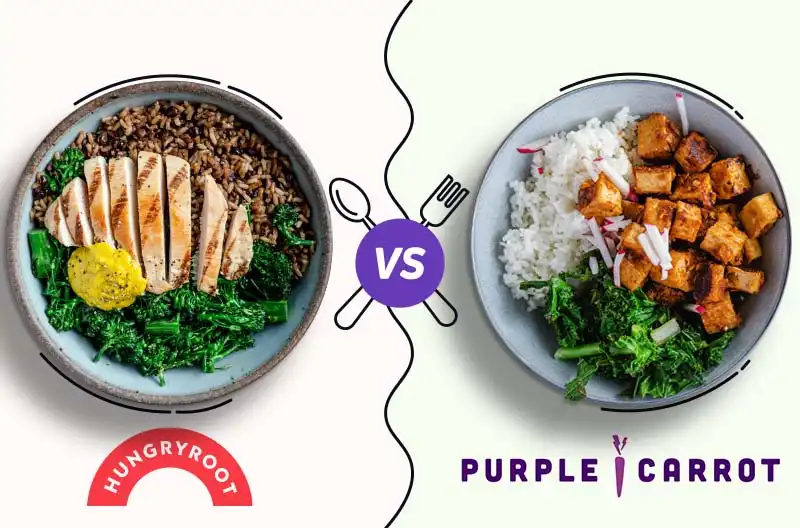
Presentation matters more than you’d think. Purple Carrot’s meals look like food a human would make. roasted vegetables with char marks, fresh herbs as garnish, sauces that aren’t just brown liquid. Hungryroot’s meals look like assembly-line output. uniform, efficient, not particularly appetizing on the plate.
The verdict: if taste is your top priority, Purple Carrot is better and it’s not close. If you just need calories in your body without thinking about it, Hungryroot is faster and cheaper.
Cooking and Prep Experience
Hungryroot is designed for people who don’t want to cook. The meal kits are pre-portioned and pre-prepped. no chopping, no measuring, no washing vegetables. You open the bag, dump everything into a pan or bowl, heat for 8-12 minutes, done. The instructions are printed on every package with photos and step-by-step directions. I timed every meal. The 10-15 minute estimate is accurate.
The packaging is smart. Each meal comes in a single bag with everything you need inside. protein, vegetables, sauce, grains. You don’t have to hunt through the box looking for ingredients. The bags are resealable, so if you’re only cooking for one, you can save half for later. The ingredient quality is fine. fresh vegetables, pre-cooked proteins, shelf-stable sauces. Nothing felt expired or questionable.
The downside: there’s no technique involved. You’re not learning to cook. You’re assembling pre-made components. If that’s what you want, great. If you want to develop kitchen skills, Hungryroot won’t help.
Purple Carrot is actual cooking. The meal kits come with whole ingredients. fresh vegetables that need chopping, raw proteins that need cooking, spices that need toasting. The recipes involve multiple steps: sauté the aromatics, add the vegetables, build the sauce, cook the grains, plate with garnishes. The instructions are detailed with photos, cooking times, and technique tips. I timed every meal. The 30-45 minute estimate is accurate, sometimes longer if you’re not experienced.
The ingredient quality is noticeably better. The vegetables are fresh and organic when possible. The tofu comes in blocks you press and cube yourself. The grains are whole and unprocessed. farro, quinoa, wild rice, not instant white rice. The spice blends are custom-mixed for each recipe. You can taste the difference.
The packaging is organized but requires more work. Ingredients are separated by meal in labeled bags, but you still have to sort through everything. The recipe cards are large, full-color, and easy to follow. I kept a few as references for making the meals again from scratch.
The difficulty level is manageable if you have basic knife skills and you’ve used a stove before. If you’re a true beginner, some recipes will be intimidating. the risotto requires constant stirring and attention, the stir-fries need high heat and quick timing. But the instructions are clear enough that you can follow them step-by-step even if you don’t know what you’re doing.
Cleanup is the tradeoff. Hungryroot dirties one pan and maybe a bowl. Purple Carrot dirties multiple pans, a cutting board, a knife, measuring spoons, and sometimes a blender or food processor. If you hate doing dishes, that matters.
Delivery and Packaging
Hungryroot ships via FedEx in insulated boxes with ice packs. Delivery is free over $70, which you’ll hit with any realistic order. They deliver to all 50 states, though some rural areas have limited coverage. You can choose your delivery day when you sign up. options vary by ZIP code, but most areas get 3-4 day choices per week.
The packaging holds up well. I tested it by leaving a box outside in 75-degree weather for 6 hours after delivery. Everything stayed cold. The ice packs were still partially frozen. The vegetables were crisp. The proteins were refrigerator-cold. The box itself is recyclable, and Hungryroot includes instructions for recycling the insulation and ice packs (most cities accept them in regular recycling, but check first).
The box arrived on time every week. No delays, no missing items, no damaged packaging. The contents were organized logically. cold items at the bottom with ice packs, shelf-stable items on top, recipe cards in a separate envelope.
Purple Carrot ships via UPS or FedEx depending on your location. Delivery is free over $50. They deliver to the continental US, excluding Alaska and Hawaii. You choose your delivery day at signup. usually 3-5 options per week depending on ZIP code. They send a tracking email with a delivery window the day before.
The packaging is more eco-friendly. Purple Carrot uses recyclable insulation made from recycled denim and paper, not styrofoam. The ice packs are plant-based and can be emptied down the drain. the gel is non-toxic and biodegradable. The box itself is recyclable. They claim a 72% lower carbon footprint than traditional meal kits, and the packaging backs that up.
I tested the same 6-hour heat exposure. Everything stayed cold. The ice packs were mostly melted but still cool. The vegetables were fine. The tofu was refrigerator-cold. The box held up better than Hungryroot’s in direct sun. the insulation is thicker.
The box arrived on time 2 out of 3 weeks. One week it was delayed by a day due to a UPS sorting error. Purple Carrot credited my account $20 without me asking, which is solid customer service. The contents were still fresh when it arrived, just a day late.
Both services pack ingredients logically. Hungryroot separates by meal type (dinners, snacks, breakfast). Purple Carrot separates by individual meal in labeled bags. Both include recipe cards. Both use ice packs appropriately. Neither service had spoilage or damage issues in my testing.
The key difference: Purple Carrot’s packaging is more sustainable. If you care about environmental impact, that’s a meaningful distinction. If you just care about the food showing up cold and fresh, both services deliver equally well.
The Final Call: Hungryroot vs Purple Carrot
Purple Carrot wins if taste and ingredient quality matter to you. The food is genuinely better. more interesting flavors, better textures, recipes designed by people who care about cooking. You’re paying $1-2 more per serving for a noticeable upgrade in quality. If you’re vegan or trying to eat more plants, this is the best meal kit on the market. Full stop.
Hungryroot wins if convenience and price matter more. The 10-15 minute prep time is real. The $9.69-$11.39/serving price point undercuts Purple Carrot and most other meal kits. The flexibility to add groceries, snacks, and breakfast items makes it a better grocery replacement than a traditional meal kit. If you hate cooking or you’re feeding a mixed household with different dietary needs, Hungryroot is the more practical choice.
Here’s the honest breakdown: if you’re the person who orders DoorDash three times a week because cooking feels like too much work, get Hungryroot. You’ll save money and you’ll actually use it. If you’re the person who watches cooking videos for fun and you get excited about trying new recipes, get Purple Carrot. You’ll enjoy the food more and you won’t feel like you’re settling for convenience over quality.
I’m keeping both. Purple Carrot for weekends when I have time to cook and I want something interesting. Hungryroot for weeknights when I just need food in my body without thinking about it. That’s the real answer. they’re solving different problems, and you probably need both at different times.
But if I had to pick one, I’d pick Purple Carrot. The food is better. That’s the whole point of a meal service. If I wanted fast and cheap, I’d just eat Chipotle.
FAQ: Hungryroot vs Purple Carrot
Is Hungryroot better than Purple Carrot?
Depends on what you want. Hungryroot is faster and cheaper ($9.69-$11.39/serving, 10-15 min prep). Purple Carrot tastes better and uses higher-quality ingredients ($11.00-$13.25/serving, 30-45 min prep). If you hate cooking, get Hungryroot. If you care about flavor, get Purple Carrot.
Which is cheaper, Hungryroot or Purple Carrot?
Hungryroot is cheaper per serving at $9.69-$11.39 vs Purple Carrot’s $11.00-$13.25. But Purple Carrot’s structured meal plans can be cheaper weekly if you’re only buying dinners. 3 meals for 2 people costs $79.50 with Purple Carrot vs $110-130 with Hungryroot after you add the snacks and extras the quiz suggests. Do the math for your actual usage before deciding.
Which has better meals, Hungryroot or Purple Carrot?
Purple Carrot. Not close. The meals are chef-designed with real technique and global flavors. Hungryroot’s meals are fine but repetitive and under-seasoned. If taste is your priority, Purple Carrot wins every time. If you just need calories without thinking, Hungryroot is faster.
Which should I try first?
Try Purple Carrot first if you’re vegan or you like cooking. Their first-box discount is better (up to 50% off plus $100 off your next 4 boxes). Try Hungryroot first if you hate cooking or you want grocery replacement, not just dinners. Both services let you pause or cancel anytime, so test one for a month and switch if it’s not working.
Can I get both Hungryroot and Purple Carrot?
Yes. I do this. Purple Carrot for weekends when I have time to cook something interesting. Hungryroot for weeknights when I need food in 10 minutes. You can pause either service week-to-week, so alternate them instead of running both every week if budget is tight.
Are Hungryroot and Purple Carrot actually healthy?
Both are healthier than takeout. Purple Carrot uses whole grains, legumes, and fresh vegetables with minimal processing. Hungryroot is more processed (pre-cooked proteins, shelf-stable sauces) but still better than fast food. If you’re tracking macros or specific nutrients, check the nutrition labels in the app before ordering. both services provide detailed breakdowns.
Do Hungryroot or Purple Carrot work for weight loss?
Purple Carrot’s low-calorie meals hit 400-500 calories per serving, which works for weight loss if you’re tracking intake. Hungryroot’s portions are smaller (400-500 cal for single-serve bowls) but easier to overeat if you’re adding snacks and extras from their store. Both services are better than restaurant food for calorie control, but neither is a dedicated weight-loss program.
How We Tested
We ordered multiple boxes from both Hungryroot and Purple Carrot, prepared each meal according to instructions, and evaluated them on taste, ingredient quality, portion sizes, ease of preparation, packaging, and overall value per serving. Our ratings reflect real hands-on experience, not marketing claims.
Frequently Asked Questions
Which is better, Hungryroot or Purple Carrot?
It depends on what matters most to you. Check our detailed comparison above. we break down taste, pricing, dietary options, and convenience so you can decide based on your priorities.
Is Hungryroot or Purple Carrot cheaper per serving?
Pricing varies by plan and servings per week. We include current per-serving pricing for both services in the comparison above so you can see the exact cost difference.
Can I try both Hungryroot and Purple Carrot before committing?
Yes. Both services typically offer introductory discounts on your first box, and you can skip or cancel anytime. Trying both is the best way to see which fits your taste and lifestyle.
The Bottom Line
Both Hungryroot and Purple Carrot are solid meal services, but they cater to different needs. Check our winner pick above for our recommendation. or use the comparison table to decide based on what matters most to you.
See the actual meals
See also: Best Purple Carrot Alternatives (2026): Same Quality for Less ($9-11/serving)
See also: How to Cancel Purple Carrot Before the Cutoff (2026 Guide)
See also: Best Hungryroot Alternatives (2026): Same Quality for Less ($8-10/serving)
See also: Green Chef vs Hungryroot (2026): Green Chef Wins on Usda Organic
See also: Daily Harvest vs Hungryroot (2026): Daily Harvest Wins on Plant-Based Breakfast
See also: Splendid Spoon vs Hungryroot (2026): Splendid Spoon Wins on Plant-Based Soups
See also: Splendid Spoon vs Purple Carrot (2026): Splendid Spoon Wins on Plant-Based Soups
See also: Veestro vs Purple Carrot (2026): Veestro Wins on Fully Vegan Prepared Frozen Meals
See also: Purple Carrot vs Daily Harvest (2026): Purple Carrot Wins on Full Vegan Dinner Meal Kits
See also: Factor vs Hungryroot (2026): Factor Wins on Fully Cooked No-Prep Meals
See also: Factor vs Purple Carrot: 2026 Comparison
See also: CookUnity vs Hungryroot (2026): Which Is Better? | MealFan
See also: CookUnity vs Purple Carrot (2026): Chef Meals vs Vegan Kits
See also: Purple Carrot vs Green Chef (2026): Vegan Meal Kit vs Organic Multi-Diet
See also: Daily Harvest vs Purple Carrot (2026): Purple Carrot Wins for Dinner, Daily Harvest for Snacks
See also: EveryPlate vs Purple Carrot (2026): Budget Kits vs Vegan Kits
See also: Dinnerly vs Purple Carrot (2026): Budget Kits vs Vegan Kits
See also: Trifecta vs Purple Carrot (2026): Organic Meal Prep vs Vegan Kits
See also: Marley Spoon vs Purple Carrot (2026): Gourmet Kits vs Vegan Kits
See also: How to Cancel Hungryroot Before the Cutoff (2026 Guide)
We track Veestro's menu and pricing monthly, our Veestro review has the most current breakdown of what you'll actually pay.
Find your meal kit in 2 minutes
Answer 5 quick questions. We'll match you to the top 3 from 24 services we track.
Used either of these? Tap your honest rating.
One tap, no signup. Your rating joins that brand's reader score.
Popular comparisons
Compare across all our rankings
- Best Meal Delivery Services of 2026: our master ranking of the top 10 services in the United States.
- Best High Protein Meal Delivery: ranked for athletes, weight management, and GLP 1 friendly meals.
- Best Diabetic Meal Delivery: ranked for Type 2 diabetes, pre diabetes, and insulin support.
- Best GLP 1 Meal Delivery: ranked for Ozempic, Wegovy, Mounjaro, and Zepbound users.